
Industry News
Wood Groove Cutter in Modern Woodworking — Process, Applications, and Choosing the Right Machine
Table of Contents
Introduction
Understanding Wood Groove Cutting
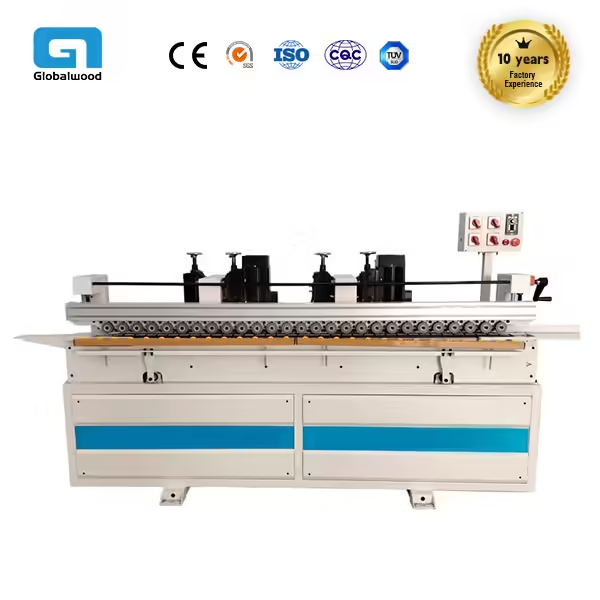
Wood groove cutting is a specialized woodworking process used to create precise grooves in panels, boards, or veneers. These grooves are essential not only for structural purposes but also for aesthetic enhancements in furniture and interior design.
By using a Wood Groove Cutter, manufacturers can ensure every groove is consistent, accurate, and aligned with the intended design. This process significantly reduces human error and increases productivity, particularly for medium to large-scale manufacturing operations.
Applications Across Woodworking Industries
Grooves are widely used in furniture production, wall panel systems, door frames, cabinetry, and decorative wood panels. They provide strong joints, guide assembly, and sometimes allow for sliding or interlocking mechanisms.
For example, a cabinet factory producing modular office furniture can use groove cutting to create interlocking drawers and cabinet backs, ensuring precise assembly without gaps.
The Wood Groove Cutting Process
Material Selection
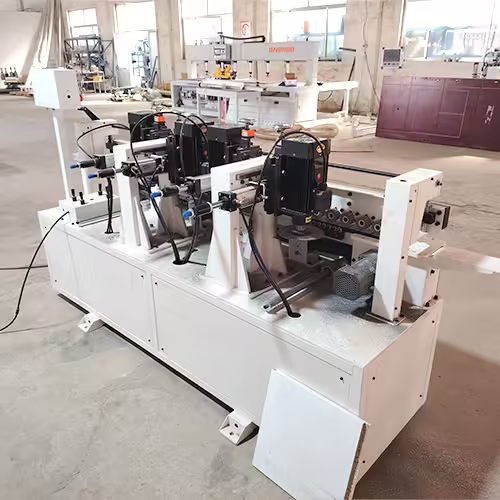
The process begins with selecting the right material. Most Wood Groove Cutters can process MDF, particleboard, plywood, and certain hardwoods.
- MDF is ideal for smooth finishes and decorative panels.
- Plywood and hardwoods are chosen for structural strength and durability.
- The material choice impacts groove depth, cutter type, and finishing requirements.
Real-World Insight: A furniture factory switching from particleboard to MDF for decorative cabinet panels noticed smoother groove edges and reduced sanding work, improving efficiency.
Groove Design and Planning
Grooves can range from simple straight cuts to complex profiles: T-slots, U-slots, dovetail grooves, and locking grooves.
- Correct groove type selection ensures structural integrity and visual appeal.
- Custom profiles can be designed for interlocking panels, sliding components, or decorative effects.
Example: A manufacturer producing modular office cabinets uses dovetail and locking grooves to allow panels to snap together without additional fasteners.
Cutting Techniques
Wood groove cutting can be executed using:
- Handheld routers: Flexible but labor-intensive, suitable for small-scale work.
- Bench-top milling machines: Medium volume production with moderate precision.
- Fully automated CNC Wood Groove Cutters: Provide high precision, speed, and repeatability, ideal for complex or large-scale production.
Parameter Insight: CNC systems allow adjustments of groove depth, width, feed speed, and spindle rotation, providing fine control for different materials.
Typical Workflow
- Position and clamp the board securely.
- Install the cutter tool and adjust cutting depth.
- Feed the board through the machine, either manually or automatically.
- Cut grooves following the planned design.
- Inspect grooves and clean residual sawdust.
Efficiency Tip: Automated feeding systems reduce operator errors and allow multiple panels to be processed consecutively, minimizing downtime.
Benefits of Automated Groove Cutting
- Consistent Groove Dimensions: Every panel is processed with the same depth and width.
- Supports Complex and Custom Profiles: CNC machines can handle multiple groove shapes in one setup.
- Reduced Labor and Rework: Automation reduces manual labor and error rates, improving production efficiency.
Wood Groove Cutter Product Overview
Wall Panel Grooving Machine
Designed for wall panels, door frames, and acoustic strips, this machine handles locking grooves, male/female grooves, flush seam grooves, U-shaped, and T-shaped grooves.
Customization: OEM/ODM supported to fit unique production requirements.
Parameter Example: 13 kW motor, 466 kg weight, 2650×1320×600 mm dimensions.
Application Case: A wall panel manufacturer producing acoustic panels reduced scrap rates by 40% after switching to an automated wall panel grooving machine.
Door Cover Line Grooving Machine
Ideal for door casings, veneers, and decorative trims, it processes plug-in sleeves, side grooves, and custom profiles.
- High Performance: 16 kW motor ensures precise and reliable cutting.
- Parameter Example: Supports high-volume production with repeatable accuracy for multiple panel sizes.
- Case Study: A furniture workshop producing customized door casings improved production speed by 60% while maintaining consistent groove quality.
CNC Wood Groove Cutter
CNC systems provide fully automated control, allowing precise regulation of groove depth, width, spacing, and feed rate.
- Versatility: Can handle multiple groove types in one setup, ideal for custom furniture or panel designs.
- Parameter Example: Motor power ranges from 15–20 kW, with adjustable feed speeds and spindle rotation for different materials.
- Real-World Example: A cabinet manufacturer producing modular kitchen panels achieved zero alignment errors across hundreds of panels, reducing assembly time and rework.
Comparing Wood Groove Cutter Machines
Parameter-Based Comparison Table
| Feature | Wall Panel Grooving Machine | Door Cover Line Grooving Machine | CNC Wood Groove Cutter |
|---|---|---|---|
| Weight | 466 kg | 466 kg | 450–600 kg |
| Motor Power | 13 kW | 16 kW | 15–20 kW |
| Dimensions (L×W×H) | 2650×1320×600 mm | 2650×1320×600 mm | Customizable |
| Groove Types | Locking, male/female, flush seam, U, T | Plug-in sleeves, side grooves, custom | Fully customizable |
| Primary Application | Wall panels, soundproofing | Door casings, decorative trims | High-volume, multi-profile production |
| Customization | OEM/ODM | OEM/ODM | Fully flexible |
Conceptual Insight:
- Wall panel machines are optimized for standard panels with consistent groove requirements.
- Door cover machines offer flexibility for decorative and functional profiles.
- CNC machines provide maximum versatility and precision for complex designs and high-volume production.
Advantages of Wood Groove Cutters
Precision and Consistency
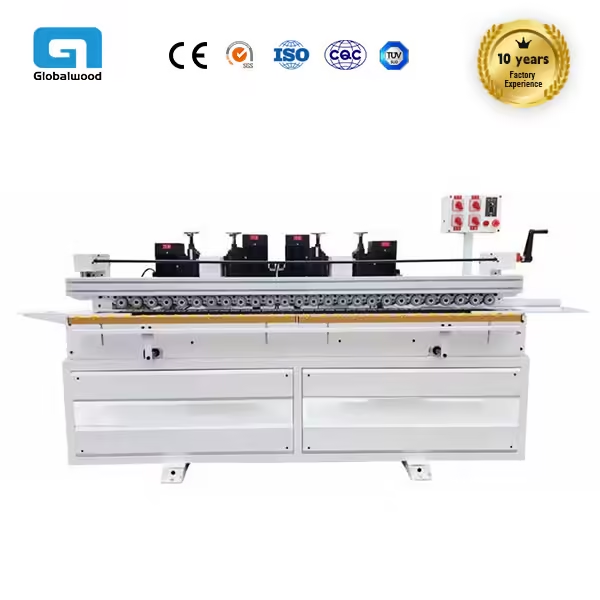
Automated groove cutters ensure every groove matches the intended depth and width, creating tight-fitting joints and smooth finishes. This level of consistency is particularly beneficial in modular furniture production, where precise alignment is critical.
Speed and Efficiency
High-performance Wood Groove Cutters can process panels at speeds up to several meters per minute, significantly higher than manual or semi-automatic methods. This reduces production time and enables timely order fulfillment for large batches.
Cost-Effectiveness
While the initial investment may be higher, these machines reduce labor dependency, minimize material waste, and lower the rate of defective products, providing a strong ROI over time.
Versatility Across Materials
Modern cutters can handle a range of materials, from MDF and particleboard to plywood and hardwood, supporting diverse product lines without requiring multiple machines.
Real-World Application Example
At a mid-sized cabinet factory in Malaysia, switching from semi-automatic routing to a CNC Wood Groove Cutter resulted in:
- Production doubling from 200 panels per shift to 450 panels.
- Defective panels reduced by 70%, ensuring higher product quality.
- Labor reduction from four operators to just one, freeing staff for other tasks.
This demonstrates how a Wood Groove Cutter can transform workflow, reduce costs, and improve product consistency in a real-world setting.
How to Choose the Right Wood Groove Cutter
Step 1: Material and Panel Size
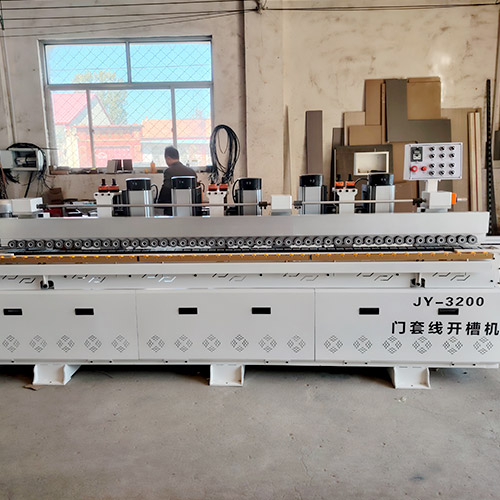
Selecting a machine that matches your material type and panel dimensions is critical for efficiency and groove quality.
- Material Compatibility: Most machines handle MDF, plywood, particleboard, and some hardwoods, but CNC systems allow wider material versatility.
- Panel Size Capacity: Ensure the machine can process the largest panels in your production line without compromising precision.
Real-World Case:
A cabinet factory in Indonesia producing 2440×1220 mm MDF panels initially used a small bench-top grooving machine. Panels often had inconsistent groove depth, causing assembly issues. Switching to a CNC Wood Groove Cutter capable of handling full panel size solved the problem, eliminating rework and increasing throughput by 50%.
Step 2: Groove Requirements
Understanding the specific groove types you need is essential because different machines handle groove profiles differently.
- Standard Groove Types: T-slot, U-slot, dovetail, locking grooves.
- Custom Profiles: Advanced CNC machines can cut decorative, angled, or complex interlocking grooves.
Parameter Insight:
- Wall panel machines typically support 5–7 groove types, ideal for standardized production.
- CNC systems can handle 10+ groove profiles simultaneously, enabling custom furniture or architectural panel work.
Example:
A furniture manufacturer producing modular office desks needed T-slots for cable management and dovetail grooves for drawers. A CNC grooving system allowed both profiles to be cut in one setup, saving hours of machine changeovers.
Step 3: Production Volume
The volume of panels you process daily or weekly determines whether a manual, semi-automatic, or fully automated machine is suitable.
- Small Workshops: Bench-top or semi-automatic grooving machines suffice for low-volume production.
- Large Factories: CNC or fully automated machines ensure high-volume production with consistent precision.
Parameter-Based Comparison:
| Production Scale | Machine Type | Typical Speed | Operator Requirement |
|---|---|---|---|
| Small workshop | Bench-top / Semi-automatic | 1–3 m/min | 1–2 operators |
| Medium factory | Wall Panel / Door Cover Machines | 5–8 m/min | 1 operator per line |
| Large factory | CNC Automated Groover | 10–18 m/min | 1 operator for multiple lines |
Real-World Example:
A wall panel manufacturer producing 10,000 panels per month upgraded from semi-automatic to a fully automated CNC grooving line. Panel throughput increased by 3x, and labor requirements dropped from 5 operators to 2, without sacrificing quality.
Step 4: Customization Needs
Customization is key if your production involves non-standard groove sizes, multiple materials, or integration with other production lines.
- OEM/ODM Options: Many machines allow custom groove dimensions, motor power adjustments, or specialized tooling.
- Integrated Systems: CNC machines can be programmed to align with cutting, edge banding, or assembly lines for continuous production.
Case Example:
A European furniture manufacturer required a mix of T-slots, dovetail, and decorative grooves for custom cabinetry. By choosing an OEM-configured CNC Wood Groove Cutter with adjustable spindle and feed rate, they were able to process multiple panel types in one pass, reducing production time by 40%.
Conclusion
Wood Groove Cutters are critical tools in modern woodworking, providing precision, efficiency, and versatility. Choosing the right machine allows manufacturers to:
- Increase production capacity
- Ensure consistent groove quality
- Reduce labor costs and material waste
Real-World Tip: Investing in a CNC Wood Groove Cutter or a high-performance wall/door grooving machine can transform workflows and maximize ROI in furniture or interior decoration manufacturing.
Need specific advice? Contact our engineers today to select the perfect Wood Groove Cutter for your production line.
FAQ
Q1: What is a Wood Groove Cutter used for in furniture production?
It creates precise grooves that enable strong joints, smooth assembly, and aesthetic detailing, such as drawers, cabinet backs, and door frames.
Q2: Can Wood Groove Cutters handle T-shaped and U-shaped grooves?
Yes, most modern machines support multiple groove profiles including T-slots, U-slots, dovetails, and custom designs.
Q3: How do wall panel grooving machines differ from door casing routers?
Wall panel machines are designed for flat panels with consistent groove requirements, while door casing routers accommodate decorative and functional profiles for doors and trims.
Q4: Can these machines process MDF and plywood?
Yes, they are compatible with MDF, particleboard, plywood, and certain hardwoods.
Q5: What maintenance is required for Wood Groove Cutters?
Regular cleaning, lubrication, and tool inspections are typically sufficient. CNC machines require minimal operator intervention.
Q6: Are custom groove sizes and OEM orders supported?
Yes, most industrial-grade machines support OEM/ODM customization for groove dimensions, shapes, and specific production requirements.