
Industry News
Precision Table Saw: Enhancing Woodworking Efficiency
Woodworking demands precision, efficiency, and reliability. Among the essential tools for achieving professional results, a precision table saw stands out. Its design ensures stability, accurate cuts, and smooth workflow, making it invaluable for furniture manufacturing, cabinetry, and wood processing. In this comprehensive guide, we explore the key concepts, practical applications, comparisons, and tips for maximizing your saw table’s performance.
Table of Contents
What is a Precision Table Saw?
Understanding Precision Cutting
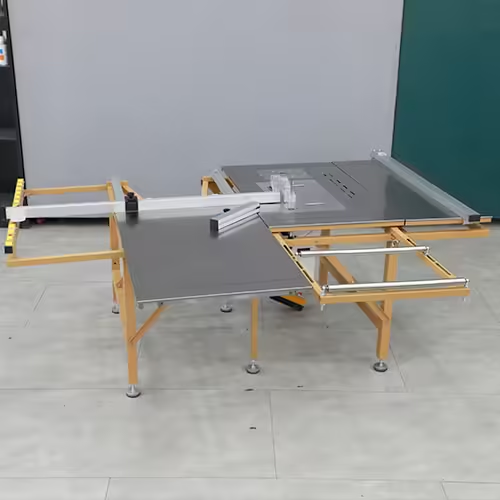
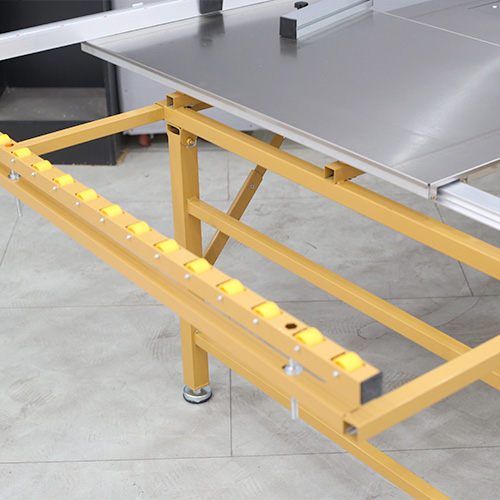
A precision table saw is designed to provide accurate and repeatable cuts. Unlike basic saw tables, it minimizes vibration and maintains a perfectly flat surface, which is essential for professional woodworking. This precision ensures that even complex cuts maintain consistent measurements, improving both efficiency and quality.
Core Features of a Precision Table Saw
Stable Surface Construction
The table surface is made from high-quality steel, aluminum, or composite materials, providing rigidity and reducing wobble or vibration during cutting.
Adjustable Angles and Height
The saw table features fine-tuned adjustments that allow for precise control of blade height and cutting angles, accommodating various material thicknesses and types of cuts.
Compatibility with Multiple Saws
Precision tables are often compatible with circular saws, miter saws, and specialty blades, making them versatile tools for diverse woodworking projects.
Ergonomic Design
Ergonomically designed layouts reduce operator fatigue and improve safety, allowing for longer, more comfortable work sessions.
Key Components of a Precision Table Saw
Tabletop / Work Surface
The main surface where wood is placed; engineered for flatness and smoothness, it is crucial for precise cuts and stability during operation.
Fence System
A guide rail that helps ensure straight cuts. It can often be adjusted and locked in place for different cutting widths.
Miter Gauge
A sliding tool used to guide the wood at specific angles, especially for crosscuts and precise angled cuts.
Blade and Arbor Assembly
The saw blade and its mounting shaft, responsible for the cutting action. Precision alignment is critical for accurate, consistent cuts.
Motor and Drive System
Powers the blade and ensures stable rotational speed, which contributes to smooth, clean cuts and reduces material tear-out.
Safety Features
Includes blade guards, anti-kickback pawls, and emergency stops, designed to protect the operator and prevent accidents.
Dust Collection Port
A connection point for dust extraction, helping keep the workspace clean and improving visibility and safety during operation.
Benefits of a Precision Table Saw
Superior Cutting Accuracy
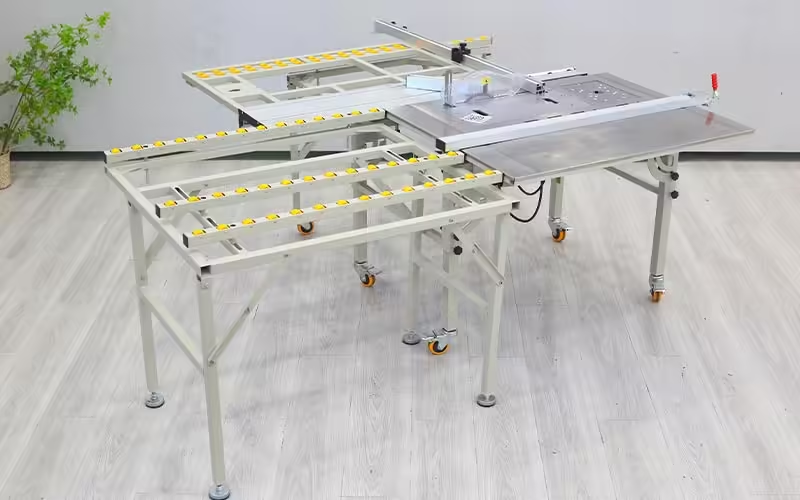
Precision table saws allow woodworkers to achieve cuts within fractions of a millimeter. This reduces material waste, ensures high-quality assemblies, and is critical for furniture, cabinetry, and custom woodwork.
Increased Workflow Efficiency
With smooth surfaces, adjustable setups, and integrated guide rails, operators can perform repetitive tasks more quickly. Precision tables streamline multi-step projects, saving both time and effort.
Long-Term Durability
Investing in a precision saw table is cost-effective over time. Durable materials and reinforced construction resist wear from heavy boards, ensuring years of reliable operation.
Enhanced Safety
Stable surfaces, proper blade alignment, and ergonomic operation minimize accidents. Many tables also include safety features such as blade guards, anti-kickback mechanisms, and non-slip feet.
How to Choose the Right Precision Table Saw
Material Selection and Its Impact
Steel
Maximum rigidity, ideal for heavy-duty industrial workshops.
Aluminum
Lightweight, resistant to corrosion, suitable for mobile setups.
Composite Materials
Balanced option for home workshops, offering moderate stability at lower cost.
Size, Load Capacity, and Workspace Considerations
Choose a table size compatible with your workshop space. Consider load capacity relative to the heaviest boards you plan to cut. Oversized boards require wider surfaces to maintain stability.
Angle and Height Adjustability
Tables with precise angle and height adjustments allow for complex bevel cuts and consistent thickness. This adaptability supports both small-scale projects and professional production lines.
Price vs. Performance
While premium models offer superior accuracy and durability, mid-range tables often provide adequate performance for DIY enthusiasts. Understanding your needs ensures cost-effectiveness.
Comparing Precision Table Saws
Table Comparison: Key Specifications
| Feature | Model A | Model B | Model C |
|---|---|---|---|
| Surface Material | Cast Aluminum | Steel | Composite |
| Max Cutting Width | 48 inches | 52 inches | 45 inches |
| Height Adjustment Range | 30-38 inches | 28-36 inches | 29-37 inches |
| Angle Adjustment | 0°–45° | 0°–45° | 0°–60° |
| Load Capacity | 400 lbs | 500 lbs | 350 lbs |
| Price Range | $450–$550 | $600–$700 | $350–$450 |
This comparison allows users to evaluate material, load capacity, adjustability, and cost. Understanding specifications helps align your choice with workshop requirements.
Conceptual Comparison: Standard vs Precision Tables
Standard saw tables provide basic support but often lack fine adjustments, stability, and repeatability. Precision tables emphasize accuracy, smooth operation, and multi-angle capability. Selecting the right type depends on whether you prioritize casual use or professional production.
Industry and Regional Applications
Furniture Manufacturing
Precision tables are widely used in furniture production, ensuring that multiple pieces align perfectly during assembly. High-volume operations benefit from repeatable, accurate cuts that reduce waste.
Cabinet Making
Cabinet workshops often require angled cuts, dado joints, and repetitive precision. Adjustable saw tables allow for versatile, consistent operations across panels.
Small Workshops and DIY Enthusiasts
Compact precision table saws offer hobbyists professional-grade accuracy in home workshops. Their adjustable features and moderate size make them suitable for limited spaces.
Regional Considerations
- North America: Larger tables for industrial-scale production are common.
- Europe: Emphasis on compact, ergonomic designs for smaller workshops.
- Asia: Balanced tables with high durability and affordability are often preferred.
Key Concepts Behind Precision Table Saws
Cutting Accuracy
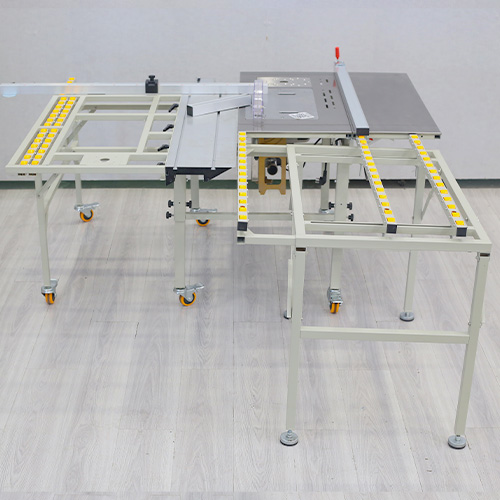
Precision involves controlling the saw’s path to minimize deviation. This includes alignment of the blade, table flatness, and minimizing vibration during cutting.
Ergonomics in Workshop Design
Comfortable height and clear visibility reduce operator fatigue. Ergonomically designed tables allow better control over feed rate and cutting angles.
Material Science
The choice of table material affects stability, vibration absorption, and durability. Heavier, denser materials generally provide better cutting precision but can be less portable.
Practical Tips for Using a Precision Table Saw
Regular Calibration
Adjust blade angle and height before major projects to ensure consistent accuracy. Even minor deviations can accumulate over multiple cuts.
Optimizing Material Feed
Use guide rails and smooth feeding techniques to prevent binding and reduce blade wear. Maintaining consistent pressure improves cut quality.
Maintenance and Cleaning
Remove sawdust buildup and lubricate moving components regularly. This prolongs the lifespan of the table and preserves precision.
Common Mistakes to Avoid

Ignoring Calibration
Skipping calibration leads to inaccurate cuts and wasted material.
Overloading the Table
Exceeding load capacity risks warping and decreases stability.
Using Incorrect Blade Type
Different woods and cuts require specific blades. Using the wrong blade can damage both the material and the saw.
Conclusion
A precision table saw is not just another woodworking tool—it is a cornerstone for accuracy, efficiency, and professional results. By understanding the key concepts, features, and practical considerations, woodworkers can select the ideal table for their needs. Proper setup, maintenance, and mindful operation ensure long-term reliability and superior cutting performance.
FAQ
What is the main advantage of a precision table saw over a standard table?
Precision table saws offer high accuracy, reduced vibration, and adjustable features for complex woodworking.
Can I use a precision table saw in a small home workshop?
Yes. Compact models are designed for home use while still providing professional-level accuracy.
How often should I calibrate my saw table?
Calibration is recommended before major projects or at least once per month for professional use.
Which saw types are compatible with these tables?
Most support circular saws, miter saws, and specialty blades depending on the model.
Are precision table saws worth the investment for hobbyists?
For serious DIY woodworking, the investment pays off in terms of accuracy, safety, and efficiency.
How do I maintain precision over time?
Regular cleaning, blade sharpening, lubrication, and flatness checks are essential to maintain accuracy.