
Industry News
Slotting Machine For Precise and Efficient Woodworking
A slotting machine, also called a grooving machine, is essential for producing precise and consistent grooves in wood. Designed for furniture manufacturing, wood panel processing, and architectural decoration, it ensures clean, accurate cuts that improve product quality and fit. This guide covers everything you need to know about slotting machines, including features, applications, advantages, maintenance, and FAQs.
Table of Contents
What Is a Slotting Machine?
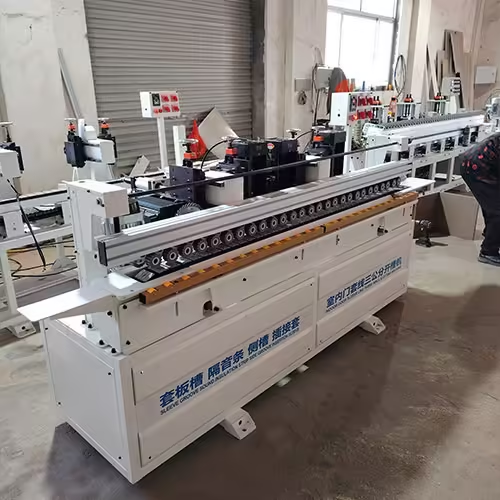
Definition and Basic Concept
A slotting machine is a woodworking machine designed to cut grooves of various sizes and depths. It ensures uniformity and precision in joinery, panel preparation, and decorative applications. Unlike manual methods, it reduces errors and increases production efficiency.
Importance in Woodworking
Grooving machines improve consistency and quality, allowing woodworkers to produce professional-grade furniture, panels, and decorative elements. The integration of stable mechanics and dust collection keeps the work environment safe and clean.
Applications of a Slotting Machine
Furniture Manufacturing
Slotting machines create precise grooves for cabinets, drawers, and doors. This ensures better fit and structural stability in assembled furniture.
Wood Panel Processing
The machine is compatible with MDF, plywood, and solid wood, providing consistent grooves for laminates or veneered panels. It adapts to different panel thicknesses, ensuring versatility.
Architectural Decoration
Grooving machines are used to craft decorative panels, moldings, and repeated design patterns. Their precision allows for consistent results, saving time and labor.
Joinery and Cabinetry
Grooves for tongue-and-groove joints, dado cuts, and rabbeted edges can be executed quickly and accurately. This improves assembly efficiency and the overall quality of wood structures.
Key Components and Design
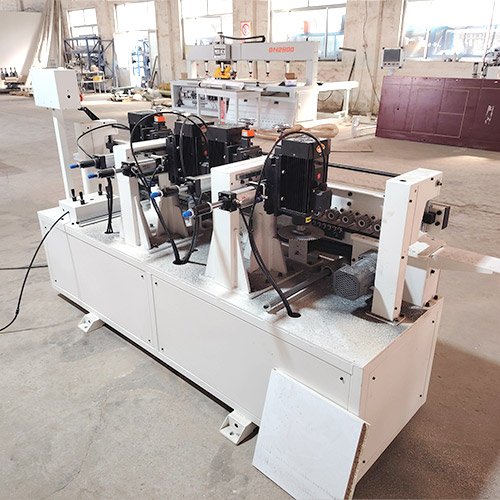
Blade and Cutting System
High-precision blades allow smooth, clean cuts. Adjustable settings let you modify groove width and depth according to project needs. Carbide-tipped blades increase durability and cutting performance.
Mechanical Stability
A sturdy frame reduces vibration and enhances cutting accuracy. Smooth feed mechanisms ensure uniform groove spacing and reliable operation for large panels.
Dust Collection and Safety Features
Built-in dust ports connect to shop vacuums, minimizing airborne sawdust. Safety guards and emergency stop functions protect operators, making it suitable for both workshops and industrial settings.
Advantages of Using a Grooving Machine
Precision and Consistency
Every groove is uniform in size and depth, ensuring a professional-quality finish.
Efficiency
Automated feed systems speed up production compared to manual cutting, reducing labor time.
Reduced Material Waste
Precise cutting minimizes errors and scrap, saving material costs.
Ease of Operation
User-friendly controls and simple setup make it accessible to operators with minimal training.
Durability
Built with heavy-duty components, it withstands prolonged use in both small and large-scale production.
Comparison: Slotting Machine vs Traditional Methods
Accuracy and Speed
A slotting machine produces precise grooves faster than hand tools, improving both efficiency and quality.
Safety and Waste Reduction
Integrated safety features and consistent cutting reduce the risk of accidents and material waste.
Industrial Suitability
Unlike manual methods, modern grooving machines can handle high-volume production and multiple panel types, making them ideal for professional workshops.
Maintenance and Best Practices
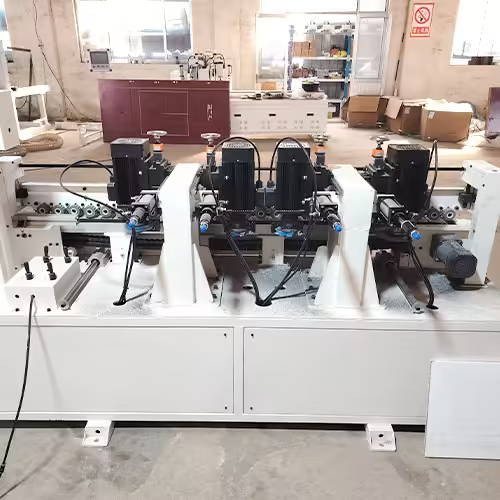
Blade Care
Regular cleaning and sharpening maintain accuracy. Check alignment to ensure grooves remain uniform.
Lubrication
Keep moving parts smooth to prevent wear and improve feed consistency.
Dust Management
Empty dust collectors frequently and inspect ports to maintain airflow.
Safety Checks
Test guards, emergency stops, and overall machine stability before use to protect operators.
Workflow Planning
Plan groove layouts in advance to minimize errors and maximize efficiency.
Buying Considerations
Groove Range
Select a machine that supports the width and depth of grooves required for your projects.
Material Compatibility
Ensure it can handle MDF, plywood, and hardwood as needed.
Production Volume
Choose models suited for your expected workload, whether small workshops or industrial applications.
Durability and Support
Prioritize machines with strong frames, high-quality blades, and reliable after-sales support.
Conclusion
A slotting machine or grooving machine is a vital tool for modern woodworking. It delivers precise, clean grooves for furniture, panels, and decorative elements while improving production efficiency and minimizing material waste. With its advanced mechanics, safety features, and adaptability, this machine is suitable for workshops of all sizes, from small hobby setups to large-scale industrial operations.
FAQ
What types of grooves can slotting machine produce?
It handles straight, decorative, tongue-and-groove, and joinery grooves with varying widths and depths.
Is slotting machine suitable for both small workshops and large factories?
Yes, different models are designed for flexible production scales.
Can it process MDF, plywood, and solid wood?
Absolutely. This slotting machine adapts to multiple wood types while maintaining groove precision.
How do I maintain blade accuracy?
Clean, sharpen, and properly align blades regularly to ensure consistent cuts.
Does it improve production efficiency?
Yes. Automated feed and stable mechanics reduce processing time and material waste.
What safety features are included?
Protective guards, emergency stops, and durable construction provide operator safety.