
Industry News
Automatic Disc Cutting: The Four-Process System for High-Efficiency Production
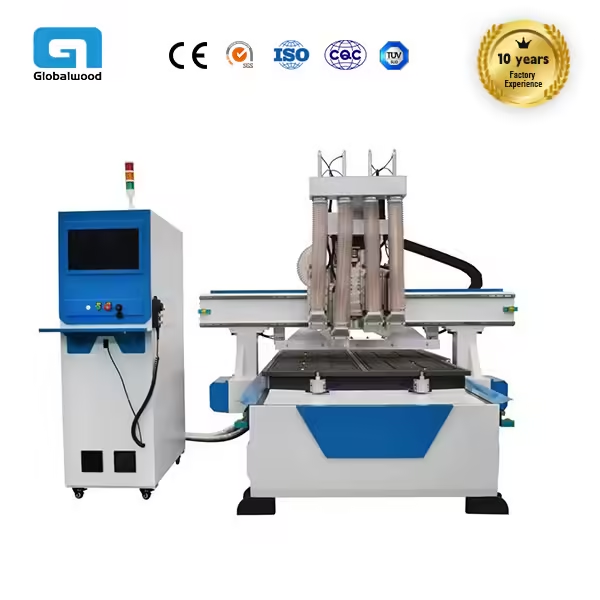
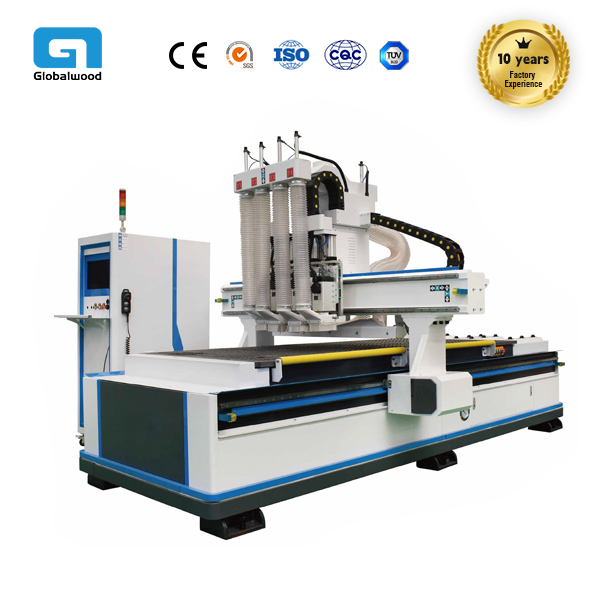
In the modern panel furniture industry, the “Four-Process” configuration has become the gold standard for versatility. By combining multiple spindles for drilling, grooving, and routing, the Automatic Disc Cutting process is transformed from a simple severance task into a multi-functional manufacturing cell.
For manufacturers utilizing equipment from Global Wood Mach, the primary goal is to eliminate manual tool changes. When these four-process machines are integrated with automated loading and unloading, they represent the pinnacle of lean manufacturing.
Table of Contents
The Synergistic Power of the Auto-loading Magazine
A high-speed cutting spindle is only effective if the material flow is constant. An Auto-loading magazine serves as the backbone of this efficiency, feeding sheets into the Automatic Disc Cutting zone without human intervention.
In a four-process setup, the machine can switch between drilling and cutting in milliseconds. The magazine ensures that while the gantry is finishing a nest, the next panel is already positioned, pre-aligned, and ready for intake. This synchronization is what allows a single operator to manage multiple production lines simultaneously.
Integrating Robotic Arms with Disc Cutting Machines
While the four-process spindles handle the internal geometry, Integrating robotic arms with disc cutting machines handles the complex logic of part sorting. Once a panel is segmented through Automatic Disc Cutting, a robotic arm can:
- Label and Sort: Instantly identify finished parts and place them on specific pallets.
- Clear Waste: Automatically remove offcuts to prevent dust buildup and mechanical interference.
- Secondary Feeding: Move parts to edge-banding or boring stations.
According to the ISO 10218-1:2011 safety standards, these integrated cells must feature synchronized emergency stops to ensure that the robot and the cutting gantry operate as a single, safe unit.
OEE Optimization: Measuring Multitasking Efficiency
For owners of a Four-Process Cutting Machine, OEE optimization is calculated differently than on a single-tool saw. Since the machine performs multiple roles, “Availability” includes the speed of tool-switching between the four spindles.
By implementing an Automatic Disc Cutting workflow, you maximize the “Performance” pillar of OEE. The machine doesn’t just cut; it processes. Reducing the time spent on manual tool adjustment means the spindle spends more time “in the wood,” directly increasing your daily output and reducing labor costs per panel.
Reducing Cycle Time in Automated Sawing
The hallmark of a premium four-process system is Reducing cycle time in automated sawing. In a traditional setup, tool changes can take 15–30 seconds. In a four-process Automatic Disc Cutting environment, this is reduced to near zero.
To further tighten the cycle, we focus on:
- Vacuum Zone Control: Automatically activating only the necessary zones to hold smaller parts during high-speed cutting.
- Optimized Pathing: Using CAM software to calculate the shortest distance between drilling and cutting nodes.
- Simultaneous Loading: The auto-loading magazine picks up the next sheet while the previous one is being offloaded.
Technical Precision and Global Standards
To maintain an international competitive edge, Automatic Disc Cutting must adhere to strict precision benchmarks. The ANSI B11.10-2003 (R2020) standard outlines the safety requirements for automated sawing and cutting machinery, emphasizing the importance of enclosed work zones and debris management in high-speed operations.
Versatility Across Materials
Whether you are processing plywood, MDF, or particleboard, the Automatic Disc Cutting capability of a four-process machine ensures clean edges and zero chipping. The Auto-loading magazine can be adjusted for different panel thicknesses, allowing the line to switch from thin cabinet backs to thick worktops seamlessly.
Predictive Maintenance for Automated Cells
In a fully integrated Automatic Disc Cutting line, downtime is expensive. Predictive maintenance is essential.
- Spindle Load Monitoring: Detecting tool dullness before it ruins a panel.
- Pneumatic Health: Ensuring the magazine’s suction cups and lifters are operating at peak pressure.
- Dust Extraction Sync: High-volume vacuum systems that activate in tandem with the cutting head.
Sourcing Your Four-Process Solution
When evaluating a vendor for Automatic Disc Cutting systems, look for “integration readiness.” A machine like the Global Wood Mach Four-Process model is designed to be the heart of a larger cell.
Key B2B procurement factors:
- Software Compatibility: Does the controller support standard G-code from CabinetVision or AlphaCam?
- Expansion Ports: Can you add Integrating robotic arms with disc cutting machines at a later date?
- Support: Availability of localized technical support and replacement spindles.
The Future: AI-Optimized Nesting
The final evolution of Automatic Disc Cutting is AI-driven nesting. Advanced algorithms now predict the best way to orient parts to minimize waste and further contribute to Reducing cycle time in automated sawing by minimizing gantry travel.
FAQ
Why use a four-process machine instead of a single-spindle ATC?
Speed. While an Automatic Tool Changer (ATC) is versatile, the four-process machine switches tools almost instantly because the spindles are already in place, making it ideal for high-volume Automatic Disc Cutting.
Can robotic arms handle heavy MDF panels?
Yes. Modern industrial robots equipped with heavy-duty vacuum grippers can easily handle full 4×8 sheets or smaller segmented parts after the cutting process.
What is the ROI on an auto-loading magazine?
Typically, the ROI is achieved within 12–18 months through labor savings and a 30% increase in daily panel throughput.