
Industry News
How Grooving Machine Works | Practical Guide to Groove Cutting and Machine Operation
Table of Contents
Understanding how grooving machine works is essential for woodworkers, shop managers, and production engineers who need repeatable, accurate grooves for joinery, panel assembly, flooring profiles, and decorative work. This guide explains the operating principles, key components, step-by-step workflow, and common settings — written to help searchers find practical answers and improve on-shop performance.
Quick Overview: How Grooving Machine Works in Practice
A grooving machine cuts straight or profile channels (grooves) along a wood piece’s face or edge. Whether using a manual feeder, an automatic feedhead, or a CNC grooving machine, the basic goal is the same: control cutter rotation, feed rate, and depth to produce a clean, accurate groove suitable for tongue-and-groove joints, biscuit slots, or V-grooves. For machining fundamentals on groove and slot cutting, see technical milling guidance from cutting-tool specialists (see References).
How Grooving Machine Works — Core Principle
At its heart, how grooving machine works comes down to three coordinated systems:
1.Rotary cutter unit (spindle / cutter head): spins specialized router or insert cutters at controlled rpm; cutter geometry determines groove profile.
2.Workfeed system: advances the workpiece at a controlled linear speed (manual feed, conveyor, or servo-driven table) to set the chip load and surface finish.
3.Depth and position control: mechanical stops, hydraulic or servo adjustments set groove depth and lateral position.
When the spindle rotates and the workpiece advances, material is sheared away to form the groove. Correct cutter selection and feed/speed balance prevent tearout and ensure dimensional tolerance. The mechanics of narrow-slot and groove cutting relate closely to slot milling theory used in precision machining.
Key Components and Functions of How Grooving Machine Works
- Cutter head / router bit: profiles range from straight flutes to multi-insert heads; carbide tooling is typical for long life.
- Spindle drive: electric motor sized for cutter load; on CNC systems the spindle speed is digitally controlled.
- Feed mechanism: belt or roller feeders for panel lines; linear servos on CNC tables for positional accuracy.
- Fence & indexing guides: set lateral position and repeatability.
- Control panel / CNC controller: in automatic grooving machine features, the controller manages position, feed, and spindle RPM.
- Dust extraction & guarding: essential for safety and surface quality.
When considering machinery purchases or process upgrades, focus on how grooving machine works together with dust extraction and guarding to maintain operator safety and consistent part quality.
Step-by-Step Guide: How Grooving Machine Works in Production
| Step | Action | Notes / Tips |
|---|---|---|
| 1 | Material set-up | Clamp or align panel against fence; check grain orientation to minimize tearout |
| 2 | Tool selection & install | Fit correct profile cutter and set spindle speed per tooling chart |
| 3 | Depth & lateral set | Set mechanical stop or program depth in CNC; verify lateral indexing |
| 4 | Test cut | Run sample to verify fit, surface finish, and dimensional tolerance |
| 5 | Production run | Maintain consistent feed, monitor dust extraction and inspect parts periodically |
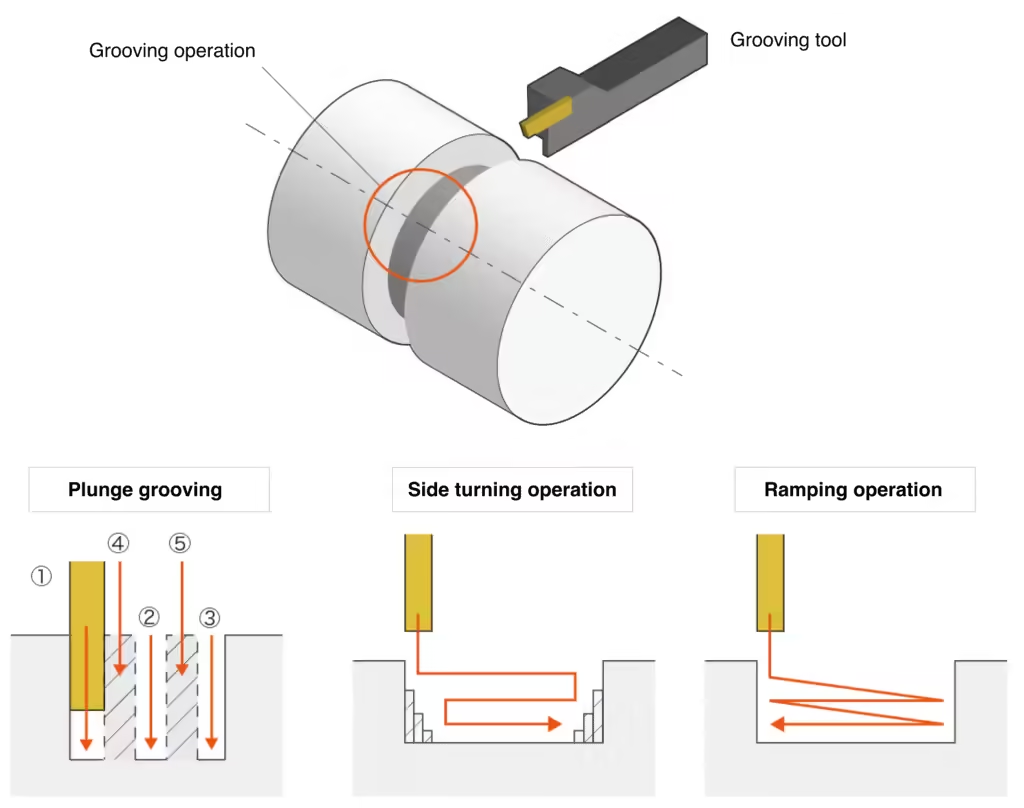
Manual vs CNC: Understanding How Grooving Machine Works for Different Systems
Manual and semi-automatic grooving machines rely on operator feed and are common in small shops. CNC grooving machine setups provide digital control of groove position, multiple passes for complex profiles, and integration with panel production lines. For high-volume production, automatic systems with infeed conveyors deliver higher throughput and consistent precision.
| Grooving Machine Type | Feed Type | Precision | Production Volume | Ideal Use Case |
|---|---|---|---|---|
| Manual / Semi-Automatic | Hand / Belt | Moderate | Low | Small workshops, custom jobs |
| Automatic / Conveyor-fed | Electric / Hydraulic | High | Medium | Panel production lines, flooring |
| CNC Grooving Machine | Servo-driven | Very High | High | High-volume furniture, joinery, industrial flooring |
Settings That Matter: How Grooving Machine Works With Feed and Speed
| Material Type | Cutter Diameter | Spindle Speed (RPM) | Feed Rate (m/min) | Depth per Pass (mm) |
|---|---|---|---|---|
| Softwood | 20–25 mm | 8,000–12,000 | 3–5 | 2–3 |
| Hardwood | 20–25 mm | 6,000–10,000 | 2–4 | 1–2 |
| MDF / Particle Board | 20–25 mm | 10,000–14,000 | 4–6 | 2–3 |
Use tooling manufacturer tables as starting points, then test and adjust for species, board density, and desired finish. These parameters directly affect the groove cutting process and overall finish quality.
Maintenance, Safety and Standards for How Grooving Machine Works
Regular maintenance (bearing checks, cutter balance, lubrication) preserves accuracy. Knowing how grooving machine works informs a maintenance plan: inspect spindle runout, verify fence alignment and replace worn cutters to avoid dimensional drift.
Safety and guarding are defined in international standards for woodworking machinery. The U.S. OSHA standard (29 CFR 1910.213) outlines specific requirements for woodworking machinery safety, including guarding of cutter heads, emergency stop controls, and operator protection features to reduce the risk of injury. Designers and operators should also follow ISO 19085 series and applicable national regulations to perform risk assessments and implement guarding and dust-control measures (see References).
For species-specific cutting behavior and best practices for reducing tearout, consult technical guides from forestry and materials research organizations.
Typical Applications & Industry Use Cases
Grooving machines are used in cabinetry, flooring (tongue-and-groove), door and window profiles, joinery, and decorative paneling. In production environments, grooving often integrates with tenoning, drilling, and edge-finishing stations to form continuous panel lines. These scenarios illustrate practical ways how grooving machine works to deliver consistent production throughput and repeatable tolerances.
To learn more about how grooving machine works and explore professional woodworking solutions, click here for detailed guides and expert resources.
Troubleshooting — Common Issues
How grooving machine works step by step?
Clamp the workpiece, install the cutter, set depth and lateral position, perform a test cut, then run production while monitoring feed and dust extraction.
What is the working principle of a grooving machine?
Controlled rotary cutting combined with consistent feed; cutter geometry removes material while feed rate and spindle RPM determine chip formation and finish.
How to set speed and feed on a grooving machine?
Use tooling manufacturer tables for SFM and feed rates; adjust for wood species, board density, and desired surface finish.
Manual vs CNC grooving machines — which to choose?
Manual or semi-automatic for low-volume flexible jobs; CNC for precision, repeatability, and integration into automated panel lines.
How to maintain a grooving machine for long-term accuracy?
Check spindle runout, align fences, sharpen cutters, and lubricate bearings regularly.