
Industry News
Woodworking Edge Banding Machine Tips & Tricks: Expert Guide for Small Workshops
Welcome to My Blog!
Great to have you here. Before we dive in, I’d love to stay connected with you beyond this page. At Shandong Global Machine Co., Ltd., we share helpful insights on woodworking machines, product updates, and factory moments — and it’s the best place for us to interact.
👉 Facebook: https://www.facebook.com/profile.php?id=61578203729530
👉 YouTube: https://www.youtube.com/@shandongglobalmachine
Let’s stay connected and grow together. Now, enjoy the blog — I hope you find it valuable and inspiring!
Table of Contents
Key Takeaways
- Comprehensive guide for optimizing woodworking edge banding machine use in small workshops
- Step-by-step tips from setup, operation, trimming, to maintenance
- Concepts: edge quality, glue types, roller pressure, feed speed, and panel compatibility
- Machine vs manual edge banding: performance, speed, precision, and cost comparisons
- Troubleshooting common issues and process optimization techniques
- Data insights and expert recommendations for consistent results
- Safety and workflow management for small workshop environments
- FAQ addressing Google-friendly, conversational questions
Introduction
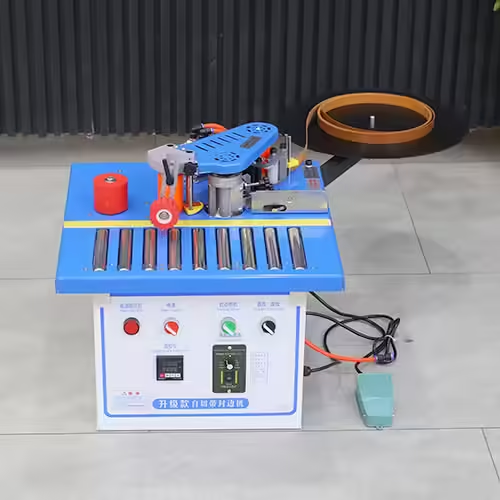
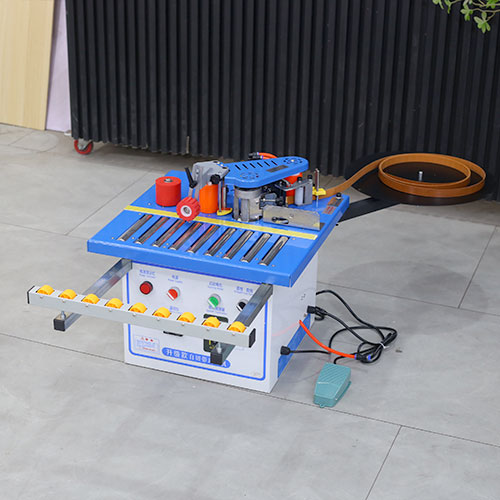
In the competitive woodworking industry, the appearance and durability of edges on furniture and panels can make or break client satisfaction. A woodworking edge banding machine is no longer a luxury—it is essential for small workshops seeking professional results without the labor intensity of manual edge application.
Small workshops often face unique challenges: limited space, diverse panel types, budget constraints, and the need for high-quality output. Using the right techniques with edge banding machines allows operators to achieve industrial-grade precision while maintaining cost efficiency.
Industry Insight: According to the Woodworking Machinery Report 2024, workshops using modern compact edge banding machines reported:
- 30–50% faster production times
- 25–35% less material waste
- Up to 99% consistency in edge adhesion and finish
This guide will explore machine setup, material selection, operational techniques, common mistakes, maintenance, and advanced tips, enabling small workshops to maximize productivity and product quality.
Preparing the Woodworking Edge Banding Machine
Concept: Material and Machine Setup
Proper setup ensures precise edge application and prevents defects. Begin by confirming panel type, edge material, and thickness. Misalignment or incorrect feed can result in peeling, gaps, or uneven edges.
Checklist for Setup:
- Level and align feed rollers
- Set correct glue temperature for edge material
- Run sample panels for calibration
Tip: Preheating Glue
Maintaining stable glue viscosity is crucial. Most PVC and ABS adhesives perform best at 180–200°C, while veneer glue often requires 160–170°C. Preheating prevents stringing, poor adhesion, and roller jamming.
Selecting the Right Woodworking Edge Banding Machine
Concept: Edge Material Types
Choosing the correct edge material affects durability, flexibility, and appearance. Common types include:
- PVC: Durable, flexible, resistant to moisture
- ABS: Eco-friendly, heat-resistant, ideal for high-temperature applications
- Veneer: Natural look, requires precise handling and higher operator skill
- Melamine: Cost-effective, suitable for low-traffic panels
Tip: Match Edge to Panel Surface
Mismatched materials can lead to delamination. Ensure compatibility by checking panel density, coating type, and thickness.
Expert Quote:
“Selecting the right edge material is often overlooked. Even a top-tier machine cannot compensate for incompatible glue or panel combinations.” – Sarah Lee, Furniture Production Consultant
Adjusting Feed Speed and Roller Pressure
Concept: Feed Speed and Pressure Balance
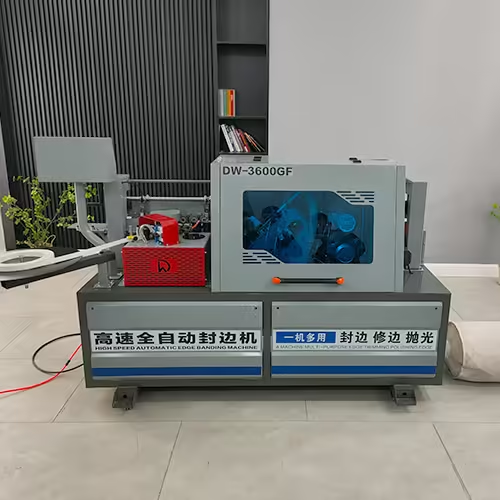
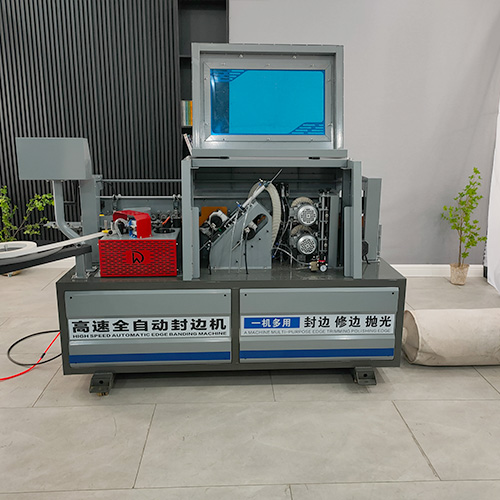
The interaction between feed speed and roller pressure directly influences adhesion quality and trim precision. Excessive speed can cause gaps; too slow may overheat glue and warp panels.
Recommended Settings:
- Feed speed: 3–5 m/min for small panels, up to 8 m/min for medium panels
- Roller pressure: Moderate; adjust based on panel thickness and edge material
Tip: Trial and Optimization
Run a few test panels at varying speeds and pressures. Measure edge adhesion strength using a peel test (standard: >25 N/cm for PVC edges).
Trimming and Finishing
Concept: Precision Edge Trimming
Trimming is critical for flush, professional results. Woodworking Edge Banding Machines often feature top and bottom trimmers; additional fine sanding may be required for veneer or soft edges.
Recommended Practices:
- Replace blades every 50–100 hours of operation depending on material
- Use fine-grit sandpaper (220–320) for veneer finishing
- Inspect each panel for minor imperfections
Tip: Avoid Chipping
Slower trimming with sharp blades prevents chipping, especially on thin veneers and melamine.
Data Insight:
Workshops using optimized trimming routines reduced edge defects by 40–50%, enhancing client satisfaction and lowering waste.
Maintenance Best Practices
Concept: Ensuring Machine Longevity
Regular maintenance is essential for consistent results and safety.
Daily Maintenance:
- Clean glue residue from application rollers and trimming blades
- Remove dust from feeding and trimming areas
Weekly Maintenance:
- Lubricate feed and trimming mechanisms
- Inspect roller alignment and blade sharpness
Monthly Maintenance:
- Calibrate sensors
- Check motor and electrical components
Expert Quote:
“Preventative maintenance is not optional. Workshops that follow a structured maintenance schedule see up to 30% less downtime.” – John Matthews, Woodworking Machinery Engineer
Common Mistakes and Troubleshooting
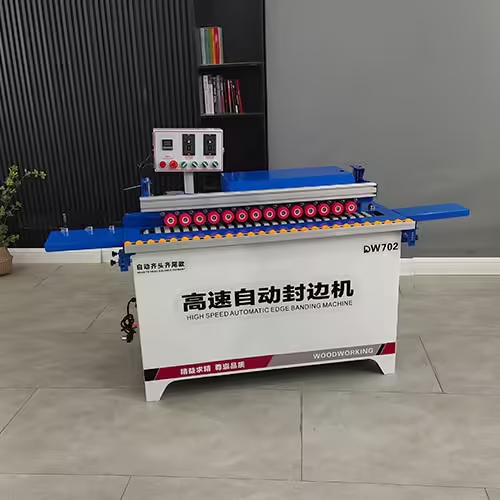
Concept: Frequent Errors
Even small errors in setup, material selection, or operation can significantly affect output quality.
Examples:
- Using glue at incorrect temperatures
- Misaligned feed rollers
- Over-speeding feed leading to gaps or uneven adhesion
Tip: Prevent Errors
Always test a small panel before starting full production, and document successful machine settings for repeatable quality.
Comparing Manual vs Machine Edge Banding
| Feature | Manual Edge Banding | Machine Edge Banding |
|---|---|---|
| Precision | Medium | High (±0.2 mm) |
| Speed | Slow | Fast (5–10 panels/hour) |
| Consistency | Variable | High |
| Labor | High | Moderate |
| Material Waste | Higher | Lower |
| Training Requirement | Medium | Low (with proper setup) |
Insight: Machine edge banding delivers industrial-level precision, significantly reducing labor and material costs, especially for small workshops producing multiple panels daily.
Advanced Tricks and Optimization
- Use pre-cut edge strips to minimize operator handling
- Adjust glue temperature and roller pressure for specific panel types
- Clean machine surfaces after each batch to avoid residue buildup
- Rotate or replace blades and rollers periodically to ensure uniformity
- Document settings for different materials to reduce trial-and-error
Industry Data:
- Workshops using documented process settings achieved up to 25% faster cycle times
- Consistent edge adhesion improved by 20%, reducing client complaints
Workflow and Safety Considerations
Concept: Small Workshop Efficiency
Efficient workflow reduces bottlenecks and operator fatigue.
- Place edge banding machine near cutting or panel saw for smooth material flow
- Use roller conveyors to reduce manual lifting and panel damage
- Implement batch processing to optimize glue heating and trimming
Concept: Safety Measures
- Wear gloves, safety glasses, and hearing protection
- Ensure emergency stop buttons are easily accessible
- Train operators on proper handling of hot glue and moving parts
Data Insight:
Safety compliance in workshops reduces minor accidents by 40–50% and prevents costly downtime.
Conclusion
Mastering a woodworking edge banding machine is critical for small workshops aiming to produce high-quality, professional panels efficiently. By following best practices in setup, material selection, feed and pressure optimization, trimming, maintenance, and workflow, even compact workshops can achieve industrial-level results.
Advanced tips, proper documentation, and consistent testing allow workshops to minimize errors, reduce material waste, and improve overall productivity. Investing in training, safety, and maintenance ensures the machine delivers reliable performance and supports long-term business growth.
FAQ
Which woodworking edge banding machine is best for small workshops?
Compact or mini woodworking edge banding machines are ideal for limited space and moderate production volumes.
How do I prevent peeling on PVC or ABS edges?
Maintain correct glue temperature, ensure roller pressure is optimal, and adjust feed speed based on panel thickness.
Can I edge band curved panels?
Yes, modern machines support curves, but carefully monitor roller pressure and feed rate to avoid gaps.
How often should blades and rollers be replaced?
Weekly inspections are recommended; replace after 50–100 hours of operation or when precision drops.
Is woodworking edge banding machine faster than manual methods?
Yes. Machine edge banding offers high speed, consistent quality, and significantly reduces labor compared to manual methods.
Can I use different glue types on the same machine?
Yes, but the machine should be calibrated for temperature and pressure according to each glue type to ensure proper adhesion.