
Industry News
Essential Lumber Mill Equipment for Small-Scale Wood Processing Factories
Welcome to My Blog!
Great to have you here. Before we dive in, I’d love to stay connected with you beyond this page. At Shandong Global Machine Co., Ltd., we share helpful insights on woodworking machines, product updates, and factory moments — and it’s the best place for us to interact.
👉 Facebook: https://www.facebook.com/profile.php?id=61578203729530
👉 YouTube: https://www.youtube.com/@shandongglobalmachine
Let’s stay connected and grow together. Now, enjoy the blog — I hope you find it valuable and inspiring!
Table of Contents
Introduction
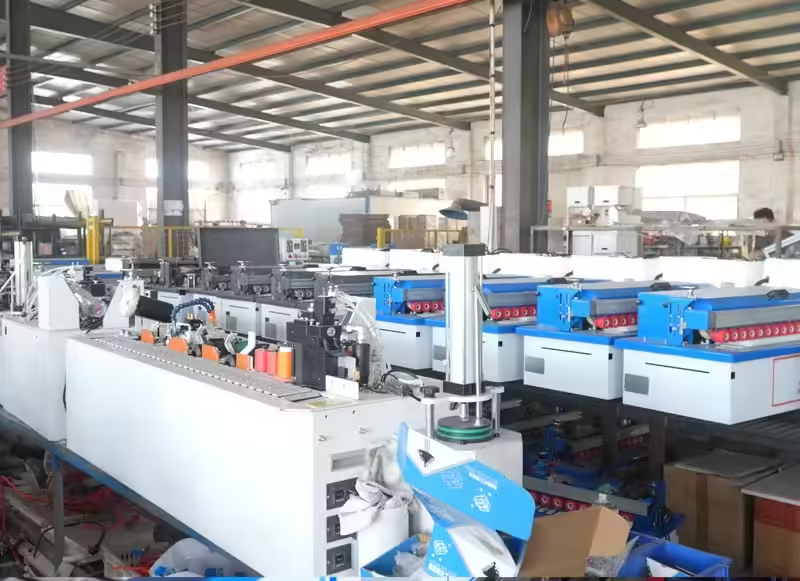
Small-scale lumber mills play a crucial role in local woodworking industries. Choosing the right lumber mill equipment can significantly impact productivity, efficiency, and product quality. In this guide, we break down the essential equipment needed, provide selection insights, and compare options to help small factory owners make informed decisions.
Key Lumber Mill Equipment for Small-Scale Wood Processing
Selecting the right lumber mill equipment requires a clear understanding of the entire workflow, from raw wood to finished products. Each piece of machinery serves a specific purpose, and small-scale factories need to balance cost, space, and production requirements. Below, we explore the core categories of machinery essential for a small wood processing facility, along with key considerations and comparisons.
Cutting and Sawing Equipment
Cutting Machines
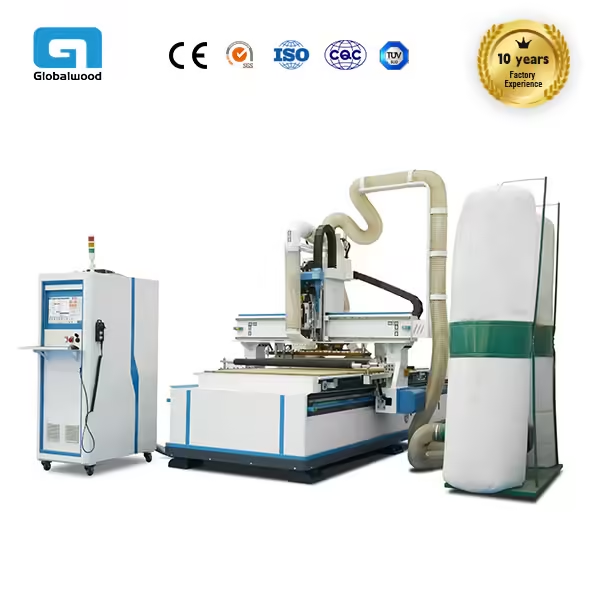
Cutting machines form the foundation of any small-scale lumber mill. They are responsible for the initial breakdown of raw logs, large panels, or planks into manageable sizes suitable for further processing. Choosing the right cutting machine depends on the type of wood being processed, its thickness, and the desired production capacity. For example, hardwood logs require robust machines with powerful motors, while softwood may be processed with smaller, more economical options.
Cutting machines also vary in automation levels. Manual machines are cost-effective and simple to operate, while semi-automatic or fully automated cutting machines increase efficiency, reduce human error, and support higher throughput. Investing in reliable lumber mill equipment ensures clean, accurate cuts, which can reduce waste and improve overall product quality.
Saw Tables
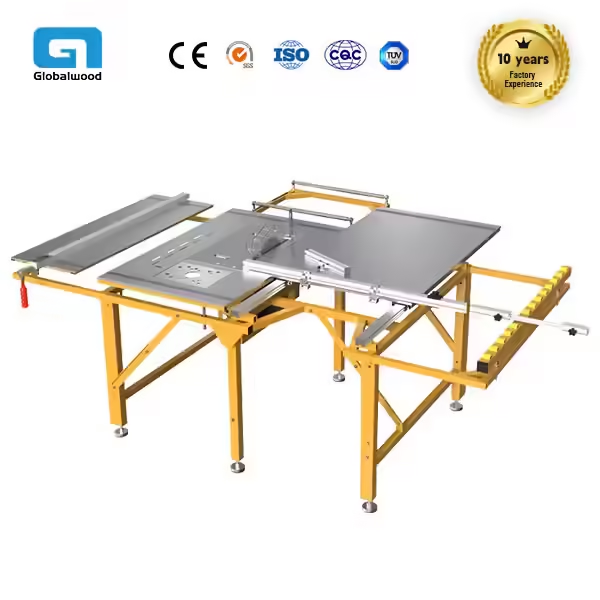
Saw tables, including sliding table saws and multi-blade saws, are essential for precision cutting. These machines allow operators to cut panels to exact dimensions, which is critical for furniture parts, cabinetry, and other finished wood products.
When selecting a saw table, it’s important to consider factors such as table size, blade type, cutting speed, and safety features. High-quality saw tables not only improve accuracy but also enhance workflow by reducing setup time. Modern saw tables integrated into a production line can work seamlessly with conveyors and other lumber mill equipment to optimize efficiency.
Slotting and Profiling Equipment
Slotting Machines
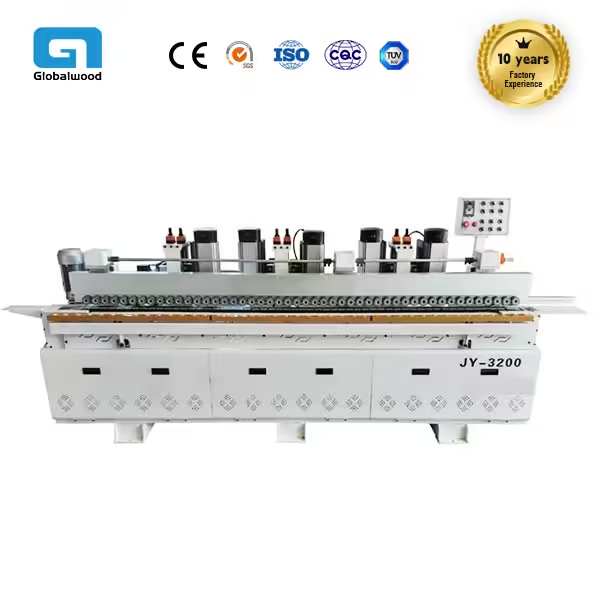
Slotting machines are designed to create grooves, channels, and mortises in wood panels. These machines are crucial for furniture components, wooden doors, frames, and other joinery tasks. Accurate slotting ensures strong, durable joints and contributes to the professional quality of the final product.
Automatic slotting machines allow operators to program specific groove patterns and dimensions, improving consistency and reducing labor intensity. Semi-automatic machines offer a compromise between cost and functionality, making them ideal for small-scale operations.
Concept Comparison: Manual vs CNC Slotting
Manual slotting machines are relatively inexpensive and easy to maintain, but they lack the precision and repeatability of CNC machines. CNC slotting machines, a more advanced type of lumber mill equipment, provide higher accuracy, faster operation, and the ability to handle complex patterns. While they require a larger initial investment, CNC slotting machines can significantly enhance productivity and reduce material waste over time.
Edge Finishing Equipment
Edge Banding Machines
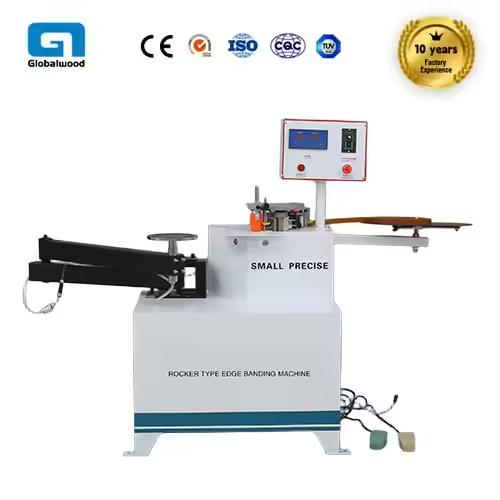
Edge banding machines cover raw panel edges with protective or decorative material, enhancing both durability and aesthetic appeal. They are essential for furniture, cabinets, and other finished wood products. Edge banders can apply PVC, veneer, or melamine tape and are available in manual, semi-automatic, or fully automatic configurations.
Choosing the right edge banding machine depends on production volume and the types of materials used. Small-scale factories may prefer semi-automatic machines to balance cost and output, while fully automatic edge banders improve consistency and reduce manual labor. Incorporating edge banding machines as part of a comprehensive lineup of lumber mill equipment ensures finished products meet professional standards.
Concept Comparison: Semi-Automatic vs Fully Automatic Edge Banders
Semi-automatic edge banders are ideal for low- to medium-volume operations. They are affordable and simple to operate but may require more manual handling. Fully automatic machines, while more expensive, provide consistent quality, reduce operator fatigue, and support higher production rates. Factories should evaluate their production needs and budget to choose the right machine.
Material Handling and Conveyor Systems
Conveyors
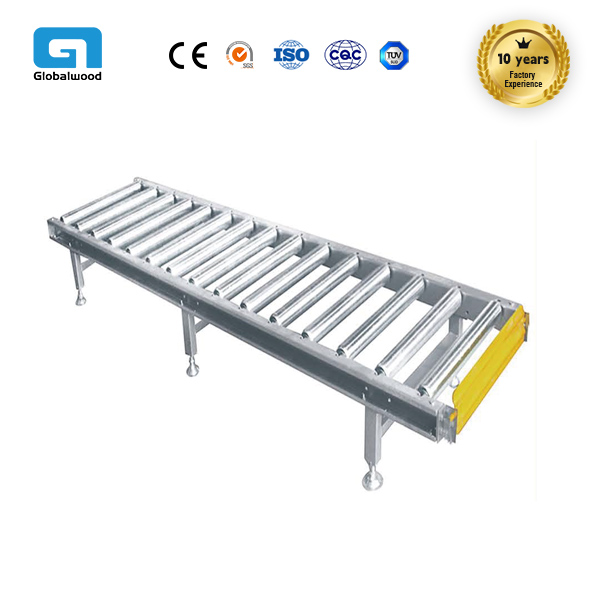
Conveyors are essential for maintaining a smooth workflow in a small lumber mill. They transport raw materials, semi-finished, and finished products efficiently across the production area, reducing manual handling and minimizing the risk of damage.
Different types of conveyors are suitable for different needs. Roller conveyors are strong and ideal for heavy items over short distances. Belt conveyors are versatile, handling materials of varying sizes over longer distances while reducing movement friction and potential damage. Integrating conveyors with other lumber mill equipment, such as saw tables and cutting machines, ensures a seamless production line.
Concept Comparison: Roller vs Belt Conveyors
Roller conveyors excel in short-distance transport and handling heavy wood planks, while belt conveyors offer smoother handling of delicate materials over longer distances. Choosing the right type depends on factory layout, material types, and production volume.
Auxiliary and Support Equipment
Beyond the core machinery, auxiliary lumber mill equipment supports production efficiency and safety:
- Dust Collection Systems: Maintain clean air, improve worker safety, and reduce the risk of fire hazards in the workshop.
- Planers and Sanding Machines: Ensure consistent thickness, smooth surfaces, and professional finishes for panels and furniture components.
- Storage and Handling Racks: Organize raw and finished materials to prevent damage, improve workflow, and maximize workspace efficiency.
Choosing the Right Lumber Mill Equipment
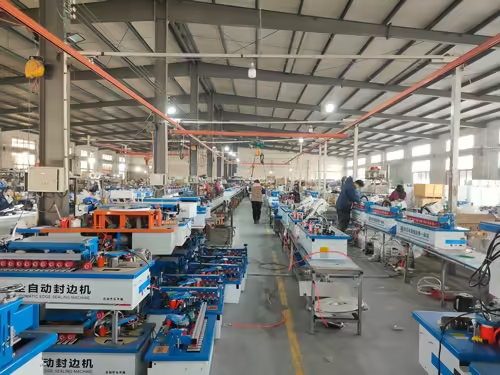
Assess Your Production Needs
Before investing, small factories should evaluate production volume, product types, and available space. Selecting lumber mill equipment that fits the scale of operations ensures efficiency and prevents unnecessary spending.
Compare New vs Used Machines
New machines offer warranties, advanced features, and longer service life. However, used equipment can significantly reduce upfront costs. When considering used machinery, check maintenance history, remaining lifespan, and the availability of spare parts to avoid unexpected downtime.
Domestic vs Imported Equipment
Domestic machines are often easier to service, more cost-effective, and better suited to local support networks. Imported machines can provide higher precision, better automation, and sometimes more advanced features. Small factories should weigh these trade-offs based on budget, production needs, and long-term operational goals.
Conclusion
Investing in the right lumber mill equipment is essential for small-scale wood processing factories. By understanding the function, capacity, and workflow integration of cutting machines, saw tables, slotting machines, edge banders, and conveyors, factory owners can improve efficiency, product quality, and profitability. Careful consideration of manual vs CNC machines, new vs used options, and auxiliary equipment ensures a well-rounded setup for long-term success.
FAQ
What basic equipment does a small lumber mill need?
A small mill typically requires a cutting machine, saw table, slotting machine, edge bander, and conveyor system. Additional equipment like planers, sanding machines, and dust collectors can improve efficiency.
How do I choose between manual and CNC slotting machines?
Manual machines are cost-effective and simple but less precise. CNC slotting machines offer higher accuracy and automation, ideal for consistent production of complex patterns.
Are conveyors necessary for small-scale wood factories?
While optional, conveyors greatly improve workflow efficiency, reduce labor, and prevent wood damage. Short-distance roller conveyors are common in small mills.
Can I buy used lumber mill equipment safely?
Yes, but inspect machine condition, maintenance records, and spare part availability. Used equipment can save costs but may have hidden issues.
How do I maintain edge banders and cutting machines?
Regular cleaning, blade or tape replacement, and lubrication are essential. Scheduled maintenance prevents downtime and ensures consistent quality.
Can I integrate different lumber mill equipment into a single production line?
Yes, many small mills integrate cutting machines, saw tables, slotting machines, edge banders, and conveyors into a seamless production line. Proper layout planning and compatible equipment improve efficiency and reduce manual handling.
How often should I perform maintenance on lumber mill equipment?
Maintenance frequency depends on usage and type of machine. For cutting machines and saw tables, daily cleaning and lubrication are recommended, while dust collectors and conveyors may require weekly checks. Scheduled maintenance ensures consistent performance and extends equipment lifespan.
What factors should I consider when buying used equipment?
Inspect for wear and tear, check maintenance records, confirm the availability of spare parts, and test machine performance if possible. Buying from a reputable supplier or dealer reduces risks associated with used lumber mill equipment.
Can small mills use CNC machines effectively?
Yes, CNC machines like slotting machines and edge banders can be highly beneficial even for small mills. They provide precise cuts, reduce human error, and allow for more complex designs. The key is to balance the cost with the expected production volume.