
Industry News
Wood Processing Machine for Small Workshops: Complete Guide
Welcome to My Blog!
Great to have you here. Before we dive in, I’d love to stay connected with you beyond this page. At Shandong Global Machine Co., Ltd., we share helpful insights on woodworking machines, product updates, and factory moments — and it’s the best place for us to interact.
👉 Facebook: https://www.facebook.com/profile.php?id=61578203729530
👉 YouTube: https://www.youtube.com/@shandongglobalmachine
Let’s stay connected and grow together. Now, enjoy the blog — I hope you find it valuable and inspiring!
Table of Contents
Key Takeaways
- Why selecting the right wood processing machine is crucial for small workshops
- Detailed analysis of machine types: mini edge banding, wall panel grooving, straight-line panel saws, roller conveyors, and CNC routers
- Critical concepts: edge quality, groove types, cutting precision, speed, automation, and material handling
- Equipment comparison: small workshop machines vs. industrial-scale machines
- Maintenance, safety, and operational best practices
- Real-world data and expert recommendations
- FAQ section answering conversational, Google-search-friendly questions
Introduction
Small woodworking workshops often face unique challenges: limited space, constrained budgets, and diverse project types ranging from furniture repair to custom cabinetry. The right wood processing machine can transform productivity, reduce labor, and guarantee high-quality results.
Why it matters: According to Woodworking Network, small workshops using appropriately sized machines have reported up to 50% faster production times and a 35% reduction in material waste compared to workshops using general-purpose or oversized machines.
Modern compact machines provide:
- High precision for detailed woodworking
- Flexibility to process different materials and panel types
- Reduced operator fatigue and improved safety
This guide explores the essential machines, their features, operational tips, technical specifications, and best practices for maximizing efficiency in small workshops.
Step 1: Mini Edge Banding Machine
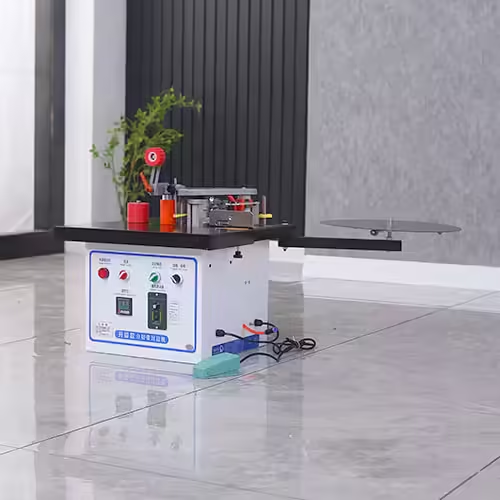
Concept: Compact and Portable Edge Application
Mini edge banding machines are designed for small workshops or on-site jobs. They apply edge tape precisely on both straight and curved panels, improving furniture aesthetics and durability.
- Weight: 22 kg, allowing portability
- Supports straight and irregular edging
- Reduces labor with independent switch and automated tape cutting
Key Features
- Material Support Plate & Micro-Switch: Ensures precise and consistent edge placement
- Pressing Wheel & Tape-Cutting Cylinder: Automated trimming improves workflow efficiency
- Technical Specifications: Voltage: 220V, Power: 1200W, Edging Width: 6–60mm, Heating Time: 5–10 min, Glue Capacity: 1000ml
Advantages for Small Workshops
- Compact footprint fits in limited space
- Suitable for a variety of materials: MDF, plywood, solid wood
- Reduces training time for operators due to intuitive controls
Expert Insight
“Mini edge banding machines are a game-changer for small workshops. They combine precision with portability, allowing for high-quality edge finishing without the need for large-scale equipment.” – Laura Chen, Furniture Production Consultant
Step 2: Wall Panel Grooving Machine
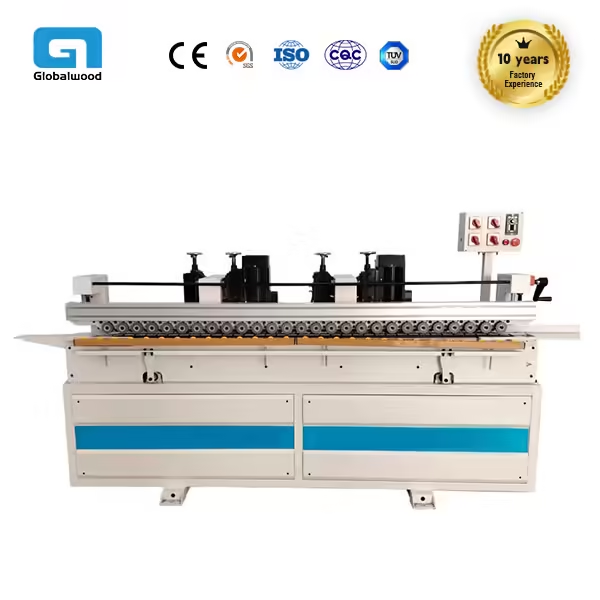
Concept: Versatile Groove Processing for Panels
Wall panel grooving machines create accurate grooves for door frames, soundproofing strips, and decorative wall panels. They support a variety of groove types, enhancing workshop versatility.
- Motor Power: 13 kW, Weight: 466 kg
- Dimensions: 2650 × 1320 × 600 mm
- Groove Types: Locking, male/female, U-shaped, T-shaped, flush seam, double female
Applications in Small Workshops
- Door frame production
- Acoustic panel grooving
- Custom wall panels and cabinetry
Advantages
- High precision for custom designs
- Stable operation ensures consistent groove depth and finish
- Customizable for OEM/ODM orders, allowing unique production lines
Data Insight
- Average groove precision: ±0.2 mm
- Cycle time per panel: ~1.5 minutes for standard panels
- Customization capability reduces setup changes by up to 30%
Step 3: Advanced Straight-Line Panel Saw
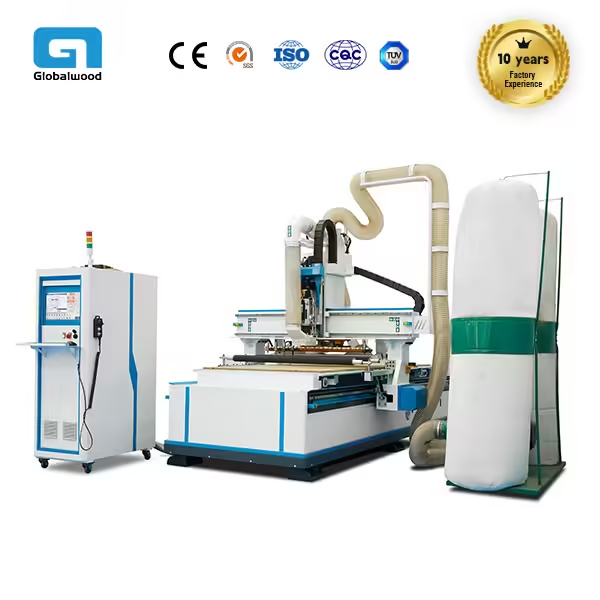
Concept: Precision Cutting for Larger Panels
Straight-line panel saws combine speed, precision, and automation, essential for small workshops handling larger panels without industrial-scale machines.
- Spindle: 9 kW air-cooled with automatic tool change
- CNC Control: Taiwan LNC system for accurate positioning
- Maximum processing size: 1300 × 2500 mm, Thickness: 200 mm
Key Features
- Vacuum Adsorption Table: Holds panels in place, preventing movement and ensuring clean cuts
- Automatic Lubrication: Extends tool life and reduces maintenance frequency
- High-Speed Transmission: X/Y axis speed 50–90 m/min, Z-axis 20 m/min
Advantages
- Multi-process capability: cutting, drilling, grooving
- Reduced labor with automated CNC programming
- Smooth, burr-free cuts for consistent product quality
Expert Opinion
“For small workshops, a CNC-enabled straight-line panel saw allows precision typically only achievable with industrial setups. It’s an investment that pays off in speed and quality.” – David Liu, CNC Machinery Expert
Step 4: Roller Conveyor for Material Handling
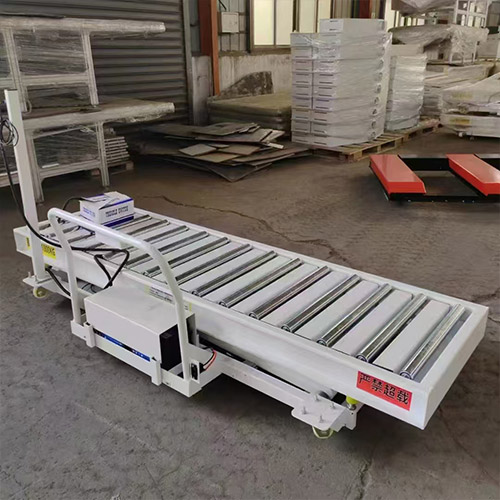
Concept: Gravity-Based Efficient Material Flow
Unpowered roller conveyors (gravity conveyors) facilitate movement of panels without motors. They reduce operator fatigue and increase workflow efficiency.
- Load Capacity: 600 kg/m
- Roller Diameter: φ12 mm, Roller Wall Thickness: 1.5 mm
- Dimensions: 2500 × 600 × 300 mm
Benefits for Small Workshops
- Reduces manual handling of heavy panels
- Low maintenance and energy-free operation
- Integrates easily with edge banding and panel saw machines
Data Insight
- Average time saved moving 20 panels: ~15 minutes
- Reduced risk of panel damage by 40% compared to manual handling
Step 5: CNC Routers for Custom Woodworking
Concept: Automated, High-Precision Cutting and Engraving
Compact CNC routers allow small workshops to perform intricate cuts, engraving, and multi-step processing.
- Suitable for MDF, plywood, solid wood, and composite panels
- Work area: 1200 × 2400 mm, Spindle: 3–5 kW
- Compatible with CAD/CAM software for design flexibility
Applications
- Custom furniture engraving
- Decorative panel design
- Small batch production for specialty projects
Advantages
- Reduces manual errors and rework
- Allows complex designs that manual tools cannot achieve
- Increases production efficiency by 25–35%
Key Concepts for Small Workshop Machines
Edge Quality
- Smooth edges prevent material wastage and improve aesthetics
- Influenced by blade sharpness, feeding speed, and pressure applied
Groove Types
- Male/female, locking, U/T-shaped grooves for assembly flexibility
- Groove precision directly affects product stability
Cutting Precision
- CNC and advanced panel saws maintain tolerances ±0.1–0.2 mm
- Critical for furniture and custom cabinetry
Workflow Efficiency
- Material handling, automated cutting, and integrated edge banding reduce cycle times
- Example: Combining edge banding + panel saw + conveyor can cut processing time by 40–50%
Machine Comparison for Small Workshops vs Industrial Use
| Feature | Small Workshop Machine | Industrial Machine |
|---|---|---|
| Footprint | Compact, portable | Large, fixed |
| Power | 1–13 kW | 20–50 kW |
| Automation | Semi-automatic | Fully automated |
| Versatility | Multi-process (cut, edge, groove) | Specialized high-volume |
| Cost | Low–Medium | High |
| Maintenance | Simple, user-friendly | Requires technicians |
| Material Capacity | Panels ≤2500×1300 mm | Panels >3000×1500 mm |
| Precision | ±0.1–0.2 mm | ±0.05 mm |
Maintenance and Safety Practices
Routine Maintenance
- Lubricate moving parts weekly
- Inspect blades, belts, rollers, and CNC spindle regularly
- Clean dust and debris to prevent motor overheating
Safety Guidelines
- Wear PPE: gloves, safety glasses, ear protection
- Ensure emergency stop buttons are accessible
- Train all operators on machine-specific procedures
Data Insight
- Proper maintenance reduces machine downtime by up to 35%
- Safety training lowers incident rates by ~40% in small workshops
Expert Recommendations
- Mini Edge Banding: Best for small furniture repair and custom cabinets
- Wall Panel Grooving: Ideal for custom door frames and acoustic panels
- Advanced Straight-Line Panel Saw: Essential for precision cutting of large panels
- Roller Conveyor: Enhances workflow and reduces manual handling
- CNC Routers: Adds flexibility for decorative and custom pieces
“Investing in compact, versatile machines allows small workshops to achieve industrial-level output without the overhead.” – Laura Chen, Furniture Production Consultant
Conclusion
Choosing the right wood processing machine allows small workshops to achieve high-quality, efficient, and safe production. By selecting compact and versatile machines such as mini edge banding machines, wall panel grooving machines, straight-line panel saws, roller conveyors, and CNC routers, workshop owners can handle diverse projects, reduce labor, and maintain precision.
Investing in proper machines, following maintenance routines, and implementing safety practices ensures workshops can compete with larger operations while maximizing profitability and output quality.
FAQ
1. Which machine is essential for a small furniture workshop?
Mini edge banding machines and straight-line panel saws are the most versatile and space-efficient options.
2. Can small workshops handle large panels without industrial space?
Yes, with straight-line panel saws and roller conveyors, panels up to 2500 × 1300 mm can be processed efficiently.
3. How often should machines be maintained?
Weekly checks for moving parts, monthly detailed inspections for CNC and cutting equipment are recommended.
4. Are mini edge banding machines suitable for curved panels?
Yes, they support straight and irregular edges for versatile applications.
5. How do small workshops improve workflow efficiency?
Combining edge banding, CNC cutting, and gravity conveyors reduces labor, cycle time, and material handling errors.
6. Can CNC routers replace manual labor in small workshops?
For intricate cuts and engraving, CNC routers greatly reduce errors and increase production efficiency by up to 35%.