
Industry News
Essential Machinery: A Pillar Guide for the Modern Woodworking Furniture Factory
High-performance machinery is the backbone of any successful woodworking furniture factory. These robust systems are engineered for efficiency, precision, and durability across sectors like furniture manufacturing, cabinetry, wood processing, and interior decoration. Whether you operate a small workshop or a large-scale facility, choosing the right equipment is critical for meeting demanding production needs.
Table of Contents
Overview of Core Woodworking Equipment
Modern woodworking furniture factories rely on specialized machines to achieve high-efficiency production. The main categories include:
- CNC Cutting Machines
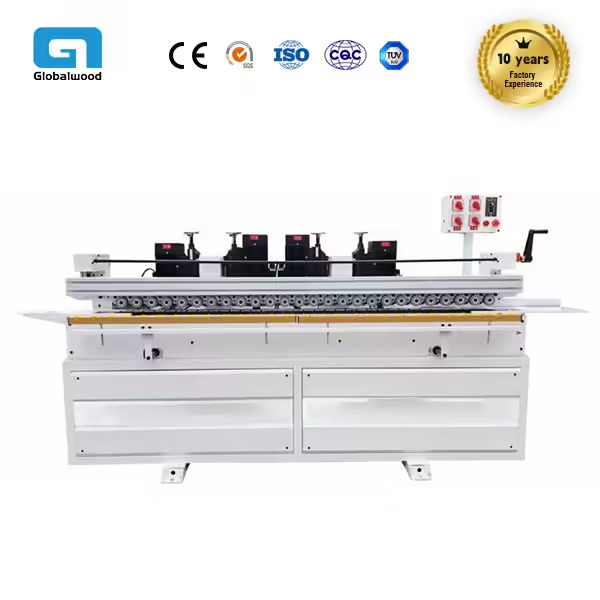
- Edge Banding Machines
- Precision Sawing and Cutting Equipment
- Specialized Grooving and Slotting Machines
In-Depth Look at Core Equipment
CNC Cutting Machines: Precision at the Core
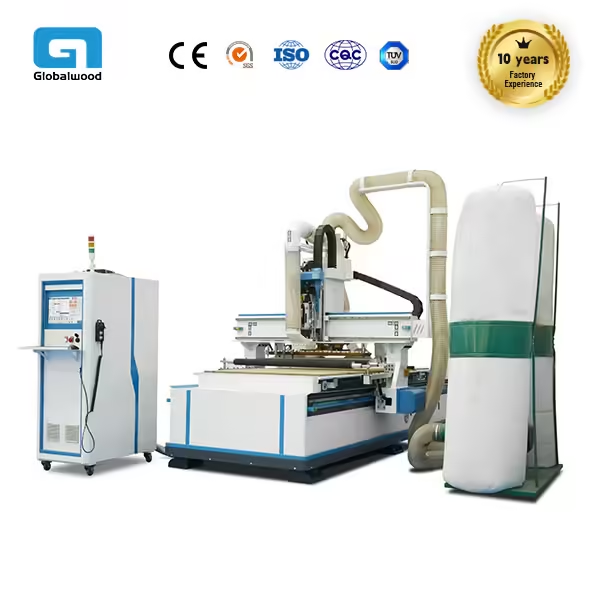
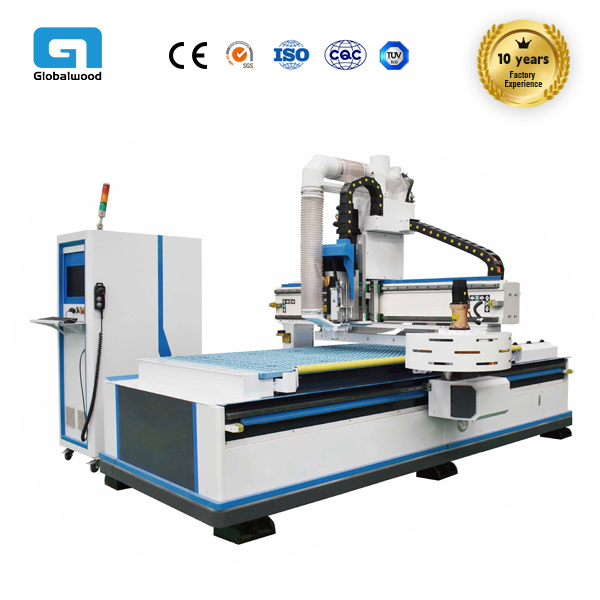
CNC Cutting Machine Concept
CNC (Computer Numerical Control) cutting machines are the cornerstone of modern furniture production. They combine digital control with mechanical precision to deliver accurate cuts while minimizing material waste. Unlike traditional cutting methods, CNC machines can handle complex patterns, intricate shapes, and repetitive tasks with consistently high accuracy, making them essential for both small workshops and large-scale manufacturing operations.
Practical Benefits:
- Reduces manual errors and material scrap
- Handles complex or custom designs that are difficult to produce manually
- Improves production speed and workflow efficiency
Custom CNC Solutions
Modern CNC machines offer high flexibility to adapt to different production requirements. Choosing the right CNC system depends on factors such as panel size, material type, production volume, and desired level of automation.
Key Features to Consider:
- Size and configuration options to match workshop space and production scale
- Functionality customization for furniture, cabinetry, or metalworking
- Software and tooling integration to optimize for specific workflows
Practical Tip: Investing in a CNC machine with modular tooling or automatic tool change options can greatly reduce downtime and increase production efficiency.
Key CNC Models
- Disk Tool Change Machining Center: Ideal for handling multiple cutting and drilling operations without manual tool swaps
- Standard Disk Tool Change Machining Center: A versatile option for medium-scale production
- High-Speed Four-Process Cutting Machine: Designed for high-volume production with fast cycle times and precise multi-step processing
Edge Banding Technology: Perfect Finishing
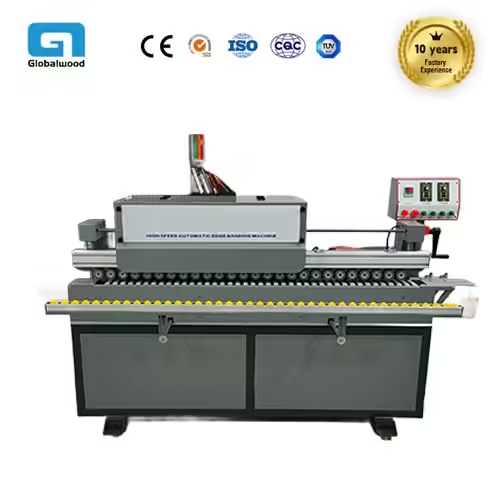

Wood Edge Banding Process
Edge banding is a crucial step in furniture manufacturing that involves applying a protective and decorative strip to the exposed edges of panels. Proper edge banding ensures not only a professional appearance but also prevents moisture damage, improves durability, and enhances overall product quality.
Common Process Steps:
- Trimming – Cutting the edge strip to size
- Application/Adhesion – Attaching PVC, ABS, or veneer strips to the panel edge
- Sealing – Using heat or adhesive to firmly bond the material
- Scraping/Finishing – Removing excess material and smoothing the surface
Edge Banding Machine Types
- Fully Automatic Machines: e.g., DW3600 High-Speed Fully Automatic Edge Banding Machine – complete automation from feeding to trimming
- High-Performance Specialized Machines: e.g., HK-670-2S-2P Dual Scraper PUR Large Edge Banding Machine – designed for thick or difficult materials, suitable for high-volume production
- Flexible Options for Complex Shapes: e.g., D5 Curved Straight Line Rocker Edge Banding Machine – handles both straight and curved panels with consistent accuracy
- Compact Solutions for Small Workshops: e.g., Mini Edge Banding Machine or 40 Compact Profile and Straight Edge Banding Machine – ideal for limited space or lower production needs
Practical Tip: Choosing the right edge banding machine depends on panel thickness, curve complexity, and production speed requirements. Fully automated systems are best for high-volume factories, while compact or semi-automatic machines fit smaller shops.
Precision Sawing and Cutting Equipment
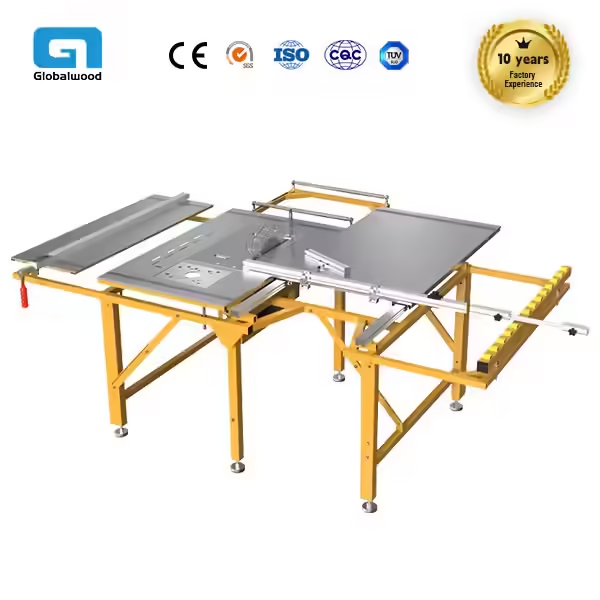

Panel Saw Efficiency
Panel saws are essential for quickly cutting large sheets of wood or composite materials. They ensure straight, smooth cuts, which reduces the need for secondary processing. Precision panel saws are especially valuable in high-volume factories where speed and accuracy directly affect production output.
Advantages of Modern Panel Saws:
- Fast, straight, and repeatable cuts
- Supports large-format sheets and multiple panel sizes
- Integrated dust collection systems for a cleaner work environment
Types of Sawing Equipment
- Advanced Straight-Line Panel Saw: For large panels and high-volume production
- JT130 Ergonomic Precision Saw Table: Designed for operator comfort and precise manual cutting
- JT180S Trolley Saw Table: Combines mobility and precision for flexible workshop layouts
- Dust-Free Saws (J2, J7, J60 Brushless Models): Maintains a clean working environment while minimizing maintenance and downtime
Practical Tip: When selecting a panel saw, consider your material types (wood, MDF, particleboard), sheet sizes, and whether the saw integrates easily into automated production lines.
Specialized Grooving and Slotting Machines
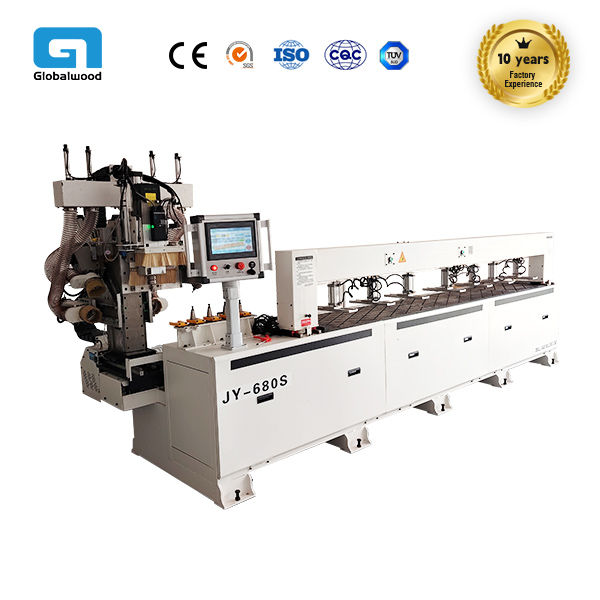
Precision Craftsmanship
Grooving and slotting machines are essential for detailed joinery work and panel preparation. They provide clean, precise cuts, often down to millimeter-level accuracy, which is crucial for high-quality furniture assembly. These machines reduce waste, improve efficiency, and ensure components fit together perfectly.
Applications:
- Door panels, drawer bottoms, wall panels
- Cabinetry joinery and assembly
- Preparation for hardware installation (e.g., hinges, locks)
Application-Specific Models
- Door Cover Line Grooving Machine: Specialized for door frame preparation
- Wall Panel Grooving Machine: Ensures consistent grooves for modular panel systems
- SKC-3800S CNC Door Lock Slotting Machine (Hinge Model): Precise slotting for lock and hinge installation, reducing manual adjustments
Practical Tip: For high-volume production, pairing CNC cutting machines with specialized grooving machines creates a seamless workflow, reduces assembly errors, and shortens production cycles.
Optimizing Production Flow with Supporting Equipment
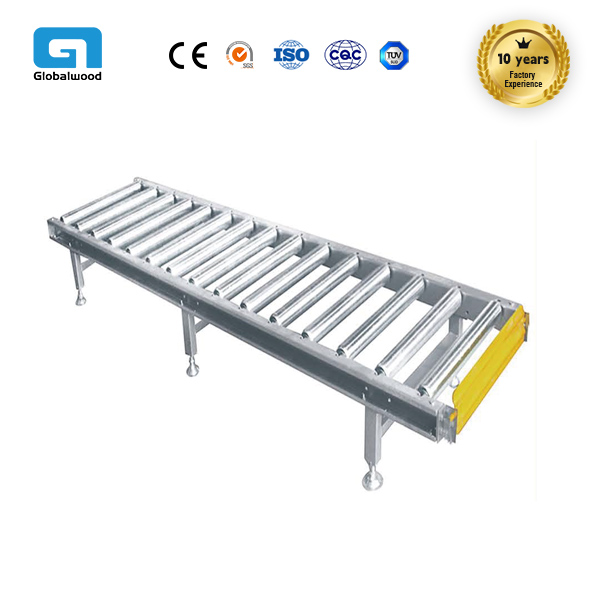

Industrial Production Conveying Equipment
Streamlining Flow
Conveyors move materials and workpieces seamlessly between processing stages, supporting high-volume production.
Conveyor Types
- Roller Conveyors
- Belt Conveyors
- Line-specific conveyors for edge banding machines
Lifting and Shifting Mechanisms
For heavy materials, equipment like shifting vehicles and lift platforms (e.g., 3-ton platforms for pit digging) ensure smooth and safe handling.
Key Advantages in Woodworking Machinery Selection
Innovation and Technology Focus
R&D teams develop intelligent, efficient, and environmentally friendly solutions for modern factories.
Safety and Ergonomics
Modern machinery includes advanced safety systems and ergonomic designs to protect operators and ensure a comfortable workspace.
The Power of Personalized Service
Tailored solutions ensure machinery meets the specific needs of your manufacturing process, whether in furniture, construction, or wood processing.
Conclusion
Investing in high-quality woodworking machinery ensures productivity, precision, and durability. Partnering with specialized suppliers that provide tailored solutions and advanced technology can significantly enhance manufacturing quality and efficiency. Explore customized solutions today to elevate your factory’s production capabilities.
FAQ
How do I choose the right tool for cutting grooves?
Depends on application: joinery or panel preparation. Machines like the Door Cover Line Grooving Machine are specialized for precise tasks.
What are the materials and steps for sealing wood edges?
Wood edge banding typically uses PVC or ABS strips. Machines perform trimming, sealing, and sometimes scraping for a perfect finish.
What machinery setup is best for solid wood bedroom furniture?
Efficient setups include Advanced Straight-Line Panel Saws, CNC Cutting Machines, and specialized centers like the JY-680S Automatic Tool Change Door and Cabinet Center.
Which machines are essential for a small-scale Woodworking Furniture Factory?
Small workshops can rely on compact CNC routers and mini edge banding machines, along with portable or semi-automatic panel saws. Simple lifting platforms or conveyors help move materials safely and efficiently. These machines allow smaller operations to maintain precision without requiring large-scale industrial equipment.
How can I improve production efficiency in a Woodworking Furniture Factory?
Production efficiency can be improved by integrating automated material handling systems, such as belt or roller conveyors, and using CNC machines with automatic tool change functions. Optimizing the production layout and providing proper operator training also help reduce downtime. Regular maintenance ensures that machines operate at peak efficiency over time.
What safety measures are recommended for a Woodworking Furniture Factory?
Safety in a woodworking furniture factory involves using emergency stops and guards on all machines, as well as proper ventilation and dust extraction to reduce hazards. Operators should be trained in ergonomic handling and safe operation of equipment. Regular inspections and maintenance of safety devices are essential to prevent accidents.
How do I select the right panel saw for a Woodworking Furniture Factory?
The right panel saw depends on the material type, panel size, and production volume. Dust-free saws like the J2, J7, or J60 models are ideal for maintaining a clean workspace. Advanced straight-line or trolley saws provide precise cuts and are well suited for high-volume operations.
Which edge banding machine is best for a high-volume Woodworking Furniture Factory?
Fully automatic edge banding machines, such as the DW3600, are ideal for large-scale production due to their speed and consistency. For specialized materials, including thick PVC or PUR, dual scraper machines like the HK-670-2S-2P provide higher performance. Machines that handle curved or irregular panels offer additional versatility for custom designs.
How can I reduce material waste in a Woodworking Furniture Factory?
Material waste can be minimized by using CNC cutting machines for precise panel cuts and optimizing cutting patterns. Implementing quality control checks at each stage of production also helps identify errors early. Integrating panel saws, grooving, and edge banding in a coordinated workflow further reduces scrap.
What is the best setup for producing custom cabinetry in a Woodworking Furniture Factory?
A reliable setup includes CNC Cutting Machines for accurate panel cuts, edge banding machines for smooth finishes, and specialized grooving machines for joinery. Conveyors and lifting platforms streamline material movement and improve workflow. This arrangement ensures consistent quality while increasing production speed.