
Industry News
Wood Processing: A Comprehensive Guide from Raw Material to Finished Product
Wood processing is the art and science of transforming natural wood into functional and aesthetically pleasing products. From construction and furniture to crafts and paper production, wood processing plays a critical role in multiple industries. In this article, we explore the key elements of wood processing, including raw materials, machinery, techniques, treatment, quality control, sustainability, and future innovations.
Table of Contents
Introduction to Wood Processing
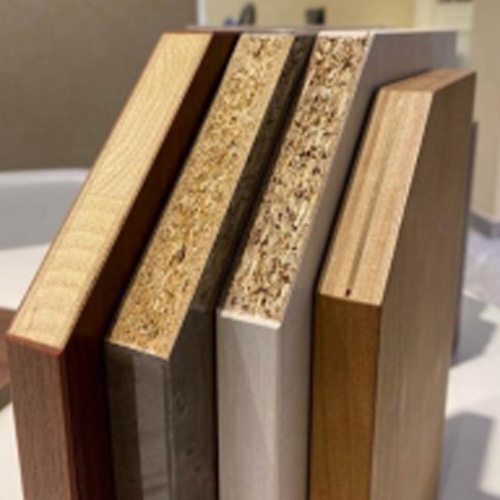
Wood processing involves the systematic conversion of timber into usable products. By understanding the elements of wood processing, you can better evaluate quality, efficiency, and sustainability in both small and large-scale operations.
The Importance of Wood Processing
- Provides durable, long-lasting wood products.
- Enhances visual appeal and surface quality.
- Reduces waste by optimizing the use of timber elements.
Applications Across Industries
Wood processing is vital in:
- Construction (structural beams, flooring)
- Furniture and cabinetry
- Paper and pulp production
- Handicrafts and decorative woodwork
Have you ever wondered why some wooden furniture lasts decades while others warp or crack within a few years? Could it be the difference in processing elements?
The difference usually comes from the quality of wood processing, including moisture control, drying techniques, anti-corrosion treatments, proper joinery, and surface finishing. High-quality processing prevents warping, cracking, and insect damage, significantly extending the product’s lifespan.
Global Trends in Wood Processing
- Increased automation and mechanization.
- Sustainable forestry and eco-friendly processing methods.
- Rising demand for engineered and composite wood products.
Raw Materials and Classification in Wood Processing
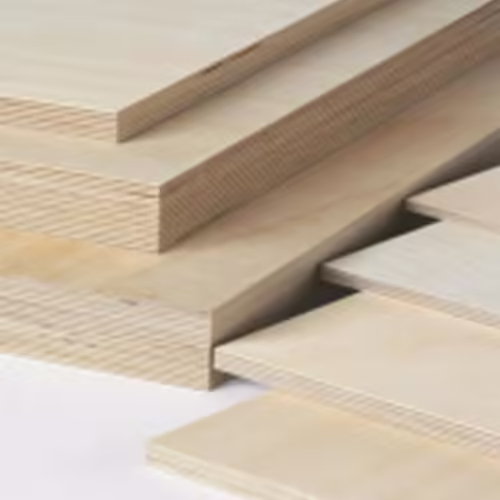
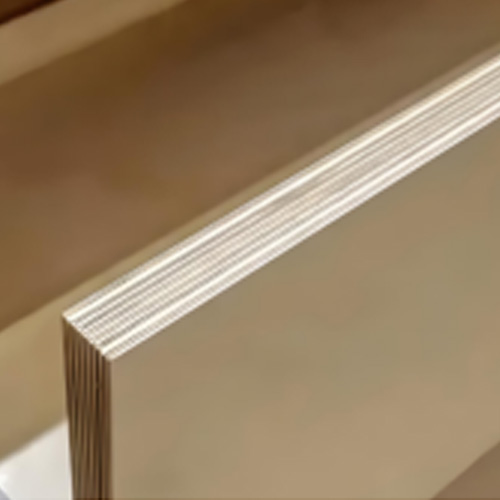
Raw material selection is a fundamental element of wood processing, influencing both the technique and quality of the final product.
Types of Raw Materials
- Logs / Roundwood: The primary form of timber before processing.
- Sawn timber: Boards or planks cut from logs.
- Plywood and laminated boards: Engineered products made from layers of wood.
- Composite wood: Particleboard, MDF, and other mixed-element boards.
Hardwood vs. Softwood
| Feature | Hardwood | Softwood |
|---|---|---|
| Density | High | Lower |
| Durability | Excellent | Moderate |
| Common Uses | Furniture, flooring | Construction, paneling |
| Processing Ease | Harder to machine | Easier to cut and shape |
If you need wood for outdoor decking, would you choose hardwood or softwood? Why do you think the type matters fordurability?
For outdoor decking, hardwood is recommended because it is denser, more wear-resistant, and more resistant to decay. Wood type affects durability, load-bearing capacity, and environmental resistance, making material selection crucial.
How Material Choice Impacts Processing
- Determines suitable cutting, drying, and finishing methods.
- Influences equipment selection and workflow efficiency.
- Affects the overall quality and lifespan of the product.
How might using a lower-quality timber affect your furniture’s durability and appearance?
Low-quality timber is prone to cracking, warping, insect damage, and uneven grain or color. This reduces both durability and visual appeal, and may increase maintenance or replacement costs.
Processing Techniques in Wood Processing
Wood processing consists of primary, secondary, and modern technological steps, each with its own elements and impact on final performance.
Primary Processing Techniques
- Sawing / Cutting: Transforming logs into manageable planks.
- Debarking: Removing bark to prevent pests and decay.
- Drying / Seasoning: Reducing moisture content to prevent warping.
Secondary Processing Techniques
- Planing / Thicknessing: Smooths surfaces and ensures uniform thickness.
- Edge Banding: Seals and protects board edges.
- Grooving / Slotting: Creates joints for assembly.
- Gluing / Laminating: Combines layers or pieces for strength.
- Sanding / Finishing: Prepares surfaces for varnish or paint.
Modern Technological Methods
- CNC Machining: High-precision cutting and shaping.
- Laser Cutting: Detailed engravings and fine patterns.
- Automated sanding and finishing lines: Efficient mass production.
Would you prefer manual sanding for control or a CNC machine for speed? What compromises might you make in each choice?
- Manual sanding: Offers precise control and attention to detail, ideal for small batches or high-end custom work, but is time-consuming and labor-intensive.
- CNC machine: Faster and consistent for mass production, but requires a higher initial investment and may need extra finishing for fine details.
The choice depends on your project priorities: precision and customization vs. speed and efficiency.
Machinery and Tools in Wood Processing
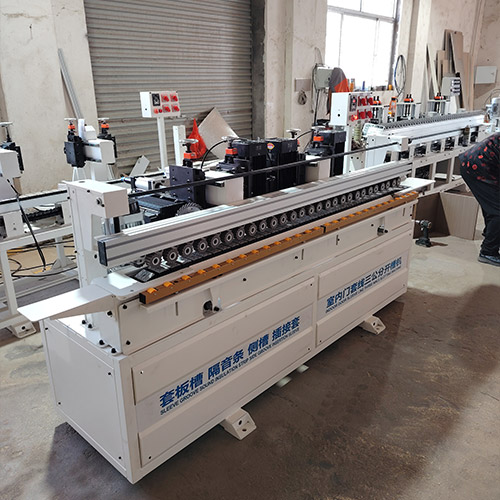
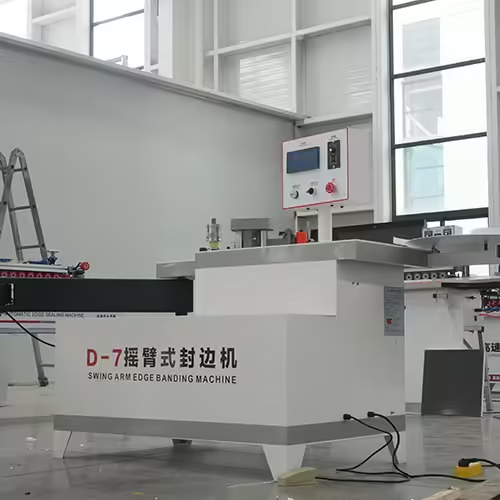
Machinery is a core element of wood processing. Choosing the right equipment impacts efficiency, precision, and safety.
Common Machinery
| Machine | Function | Processing Stage |
|---|---|---|
| Edge Banding Machine | Seals board edges, improves aesthetics | Surface finishing |
| Panel Saw / Wood Cutter | Cuts boards to precise sizes | Primary cutting |
| Slotting / Grooving Machine | Creates grooves or slots for joints | Secondary processing |
| Dust-Free Saw / Vacuum Saw | Reduces sawdust pollution | Primary cutting |
| Table Saw | Straight cuts, flexible for small workshops | Primary cutting |
| Planer | Smooths surfaces, ensures thickness consistency | Secondary processing |
| Sander | Polishes and smooths wood surfaces | Surface finishing |
| CNC Machining Center | High-precision cutting, engraving | Advanced processing |
| Thicknesser / Drum Sander | Controls board thickness and flatness | Secondary, bulk production |
Manual Tools vs. Machinery
Comparison of Elements:
| Aspect | Manual Tools | Machinery |
|---|---|---|
| Precision | Medium | High |
| Speed | Slow | Fast |
| Cost | Low | High initial investment |
| Flexibility | High | Requires setup |
If setting up a small workshop, which machines are essential and which could you delay purchasing?
Essential: Table saw / panel saw, planer, and sander—for basic cutting, leveling, and finishing.
Optional: Edge banding machine, slotting machine, CNC machine—for small-scale setups, manual alternatives or outsourcing these tasks can be used initially.
Wood Treatment and Preservation
Proper treatment is essential to enhance durability and aesthetics.
Common Treatments
- Drying and Moisture Control: Prevents warping and cracking.
- Chemical Preservation: Protects against rot and insects.
- Surface Coatings: Staining, varnishing, or painting.
- Eco-Friendly Methods: Natural oils, water-based coatings.
Would you rather use chemically treated wood for longevity or natural wood for a safer home environment?
It depends on the application:
- Outdoor or humid areas: Chemically treated wood resists decay and insect damage.
- Indoor furniture or children’s items: Natural wood is safer, non-toxic, and environmentally friendly.
Quality Control and Standards in Wood Processing
Quality control ensures reliability and safety in finished products.
Key Quality Elements
- Moisture content testing.
- Visual inspection for defects (knots, cracks, warp).
- Strength and density evaluation.
- Compliance with ISO or national standards (GB, ASTM).
Would you pay extra for wood that has been carefully quality-checked, knowing it may last longer?
Yes. Paying more for quality-checked wood reduces the risk of cracking, warping, or defects, improves longevity, and is cost-effective over time.
Environmental and Sustainability Elements in Wood Processing
Sustainability is increasingly central in modern wood processing.
Key Sustainability Practices
- Responsible Forest Management: Using certified, renewable wood.
- Waste Reduction: Recycling sawdust and offcuts.
- Green Coatings: Low-VOC finishes and energy-efficient machinery.
Would you choose slightly more expensive sustainably processed wood for your home? Why or why not?
Yes. Sustainable wood reduces environmental impact, avoids harmful chemicals, benefits home health, and supports responsible forestry practices.
Common Problems and Solutions in Wood Processing
Typical Challenges
- Warping, cracking, or splitting.
- Surface roughness or uneven color.
- Weak glue joints or lamination defects.
- Low productivity or equipment failure.
Practical Solutions
- Control drying and moisture levels carefully.
- Select appropriate surface treatments.
- Maintain machinery regularly to prevent downtime.
Have you ever had a DIY project ruined by warped wood? How could understanding wood processing elements have helped?
Understanding elements like drying, moisture control, material selection, and protective treatments helps in choosing suitable wood and taking precautions, effectively preventing warping or cracking.
Future Trends and Innovations in Wood Processing
Emerging Elements
- Automation and AI-driven cutting and finishing.
- Advanced engineered and composite wood materials.
- Smart monitoring for production efficiency and quality.
Would you invest in an AI-powered CNC machine that cuts labor in half? Would you choose engineered wood over natural timber for long-term projects?
- AI CNC investment: Ideal for large-scale production, as it reduces labor costs and increases consistency.
- Engineered wood: Suitable for projects requiring dimensional stability and resistance to warping, like flooring or furniture. Natural timber may be preferred if unique grain patterns and aesthetics are more important.
Conclusion
Wood processing integrates traditional craftsmanship and modern technology to create durable, functional, and visually appealing products. Understanding the elements of raw materials, machinery, techniques, treatment, quality control, sustainability, and innovation allows both professionals and enthusiasts to make smarter, more sustainable choices. Next time you see a wooden table or floor, think about the careful processes and decisions behind it—every element matters.